Skip navigation

Category Archives: Sourdough Sunday

Weekly post about sourdoughs

I’ve mentioned previously how local foods were vital to a healthy sourdough’s diet so I’ll get right to the subject of this week’s post: Fiddleheads!

For years Thing 1 and I have been meaning to harvest fiddleheads. And each year we somehow miss the short window of opportunity. But not this year!

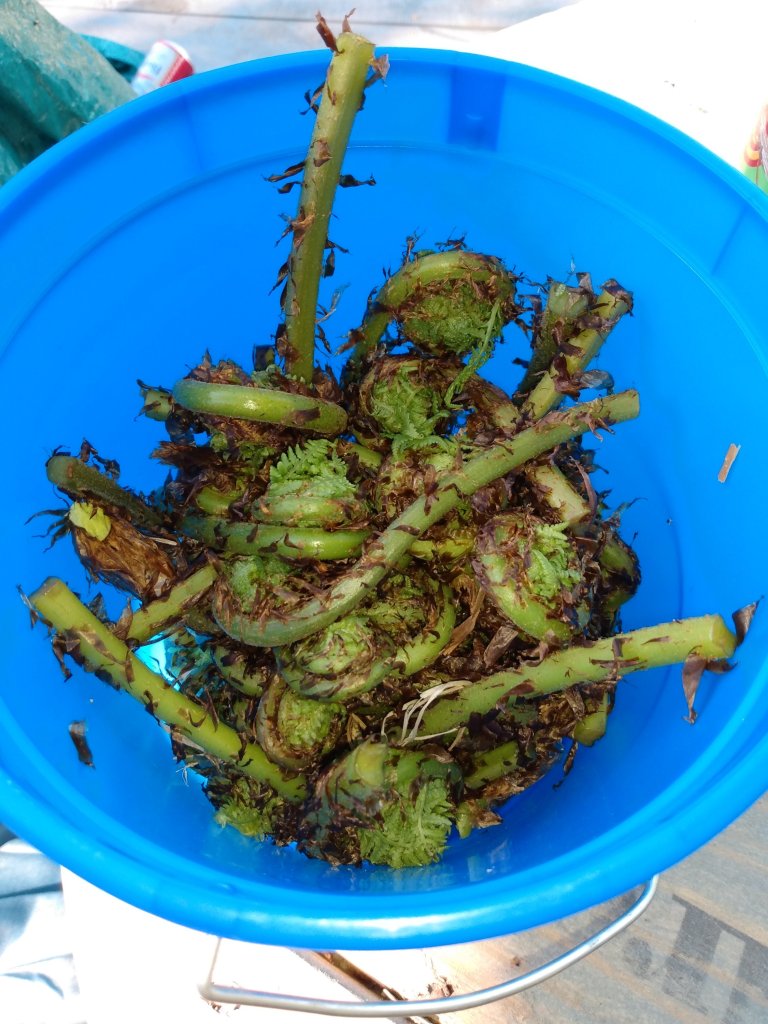
Scouting through the woods yesterday I noticed most of the ferns were up and thought I’d missed out yet again. But halfway through our hike I found a bottom area full of fiddleheads. So I refreshed my memory on safe harvesting and planned to go out first thing in the morning to provide the mosquitos breakfast & pick some.

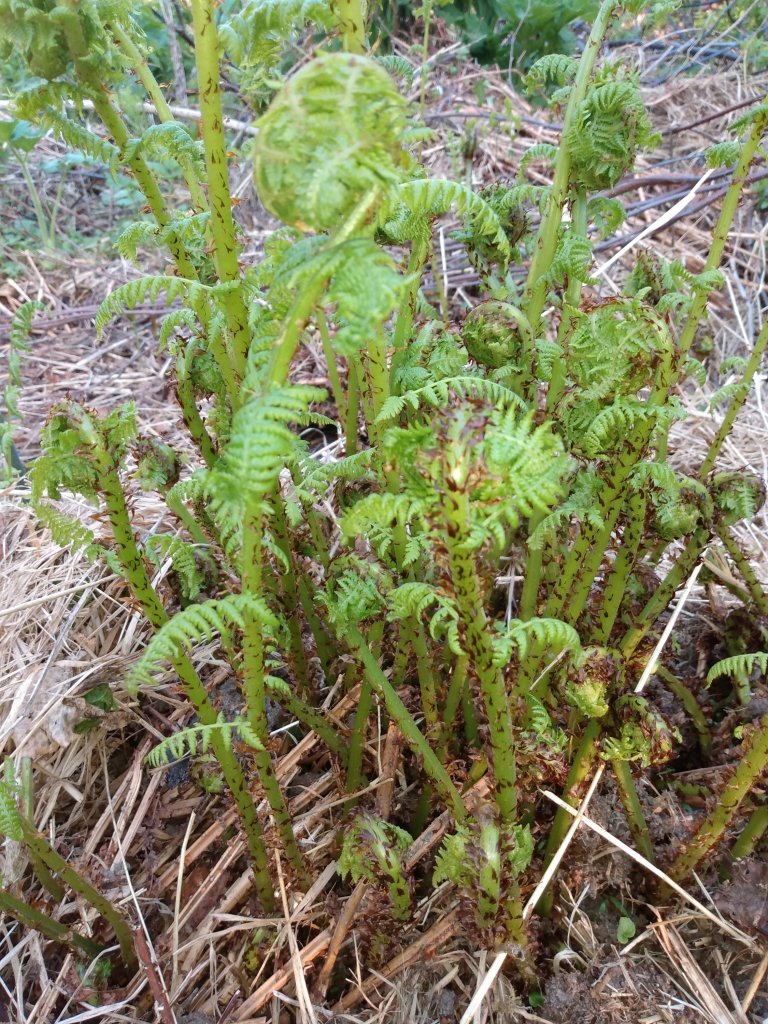
All of the ferns I observed are Lady Ferns. Ostrich ferns are supposed to grow in this region too but I didn’t locate any.

Clump of Lady Ferns

I picked enough to try a batch of pickled Fiddleheads. We’ll see if we like them. Then next year we can harvest more. There’s been no harvest pressure on these ferns plus there’s plenty for us to chose from.

I harvested about half a pound

I sauteed a couple to try them and I love ’em!! Can’t wait to pickle the rest for a longer lasting treat!

I’m going to be in the lookout for Ostrich ferns too.

Resources:

Click to access Fiddleheads.pdf

Harvesting Wild Fiddlehead Ferns in Alaska

I am a Fiddlehead Forager | INDIE ALASKA

https://www.wikihow.com/Forage-or-Harvest-Fiddleheads

Food self sufficiency is something any good Alaskan Sourdough knows a good deal about. And you use what you have to make your garden work. We’re not buying a bunch of fancy stuff, just making do with what’s around the place.

My first summer in our home (2015) I had high hopes for a bountiful harvest from my new (to me) garden plot. We even constructed a small greenhouse to help extend our season a little bit. I planted all sorts of things like potatoes, tomatoes, okra, herbs and squash. I was so excited! I mean, what could go wrong, I’ve been gardening most of my life and usually pretty successfully at that. Well, Alaska throws a mean curve ball.

Besides planting most all the wrong things, I had no concept of Alaska’s surprise hard frosts nor her relentless sun beating down day in and night too. And exactly how much water one needs to apply to soil that really never gets enough of the stuff. Neither did I appreciate how fast grass and weeds grow here.

To say that my first Alaskan garden was an epic failure is an understatement. It was so devastating, all that work, time and $$ down the drain, that I haven’t really gardened since, with the exception of a container here and there and cold hardy flowers. (I mean petunias.)

This year we’re giving it a full-on go again. Mostly because my oldest daughter wants to do it. It’s her project and I’m offering a little support along the way. At least she’s starting off with a little more experience in Alaskan summer weather cycle and what’s really best to plant here. And no, there’s no plan to grow okra.

She’s started out with measuring the garden fence to get an idea of how much electric fence we need plus square footage to plan out her scheme. She’s plotted 5 raised beds, hugelkulture style, and a variety of tire towers and containers around the perimeter. Plus an update to the greenhouse which needs a new skin.

Her planned crops include potatoes, sweet potatoes, onions, garlic, squash, broccoli, cauliflower, herbs, peas, radishes, blueberries, rhubarb, strawberries, raspberries and flowers, some edible.

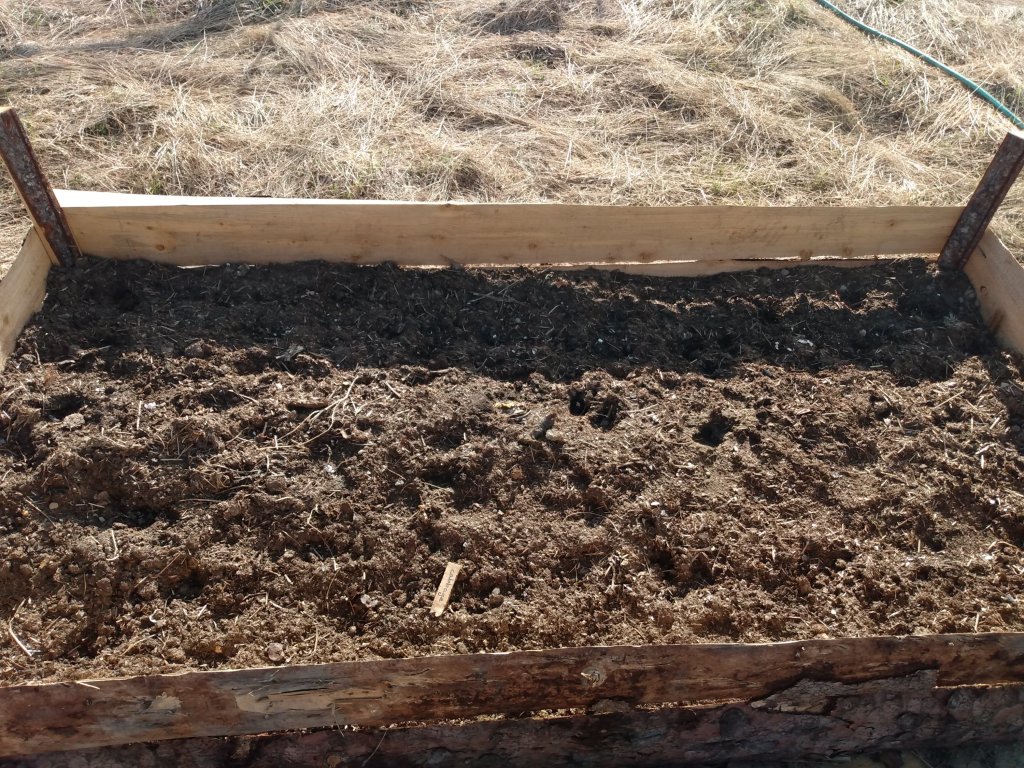
Kids building raised bed #1. Cardboard over existing grass, sawmill slab raised beds, filled with topsoil mixed with manure & sawdust on top of a central pile of wood scrap, limbs and leaves. To be topped with compost.

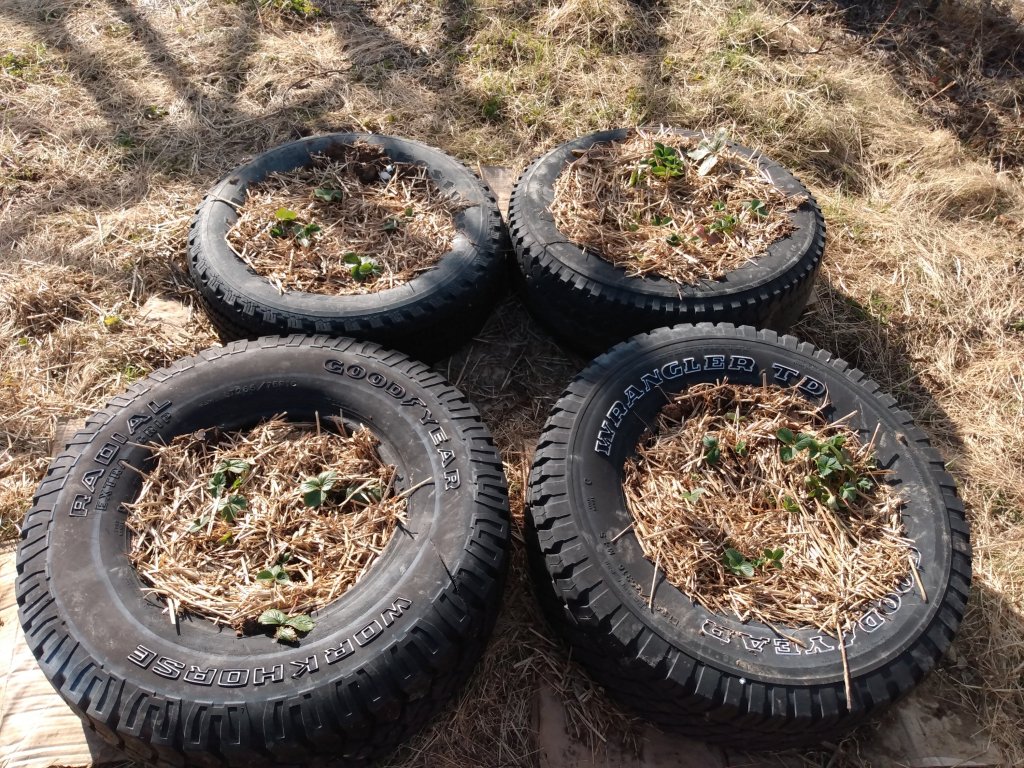
There’s the existing compost pile (that Thing 2 made years prior for a science project) that she’s expanding to double the capacity. Plus she’s already made her strawberry bed with tires and shared plants from Nancy, our neighbor up the road. Nancy is the sweetest. She’s taken the girls under her gardener’s wing and been bringing them plants and sharing information (and ice cream too apparently) with them. This relationship I approve of, not sure about the ice cream tho. Lol

With each passing weekend we try and do a little more work on the garden prep. We are still frosting at night here in our little low spot at the bottom of the hill. So waiting to go to the greenhouse to buy plants, but soon we’ll take out a small loan to make the trip.

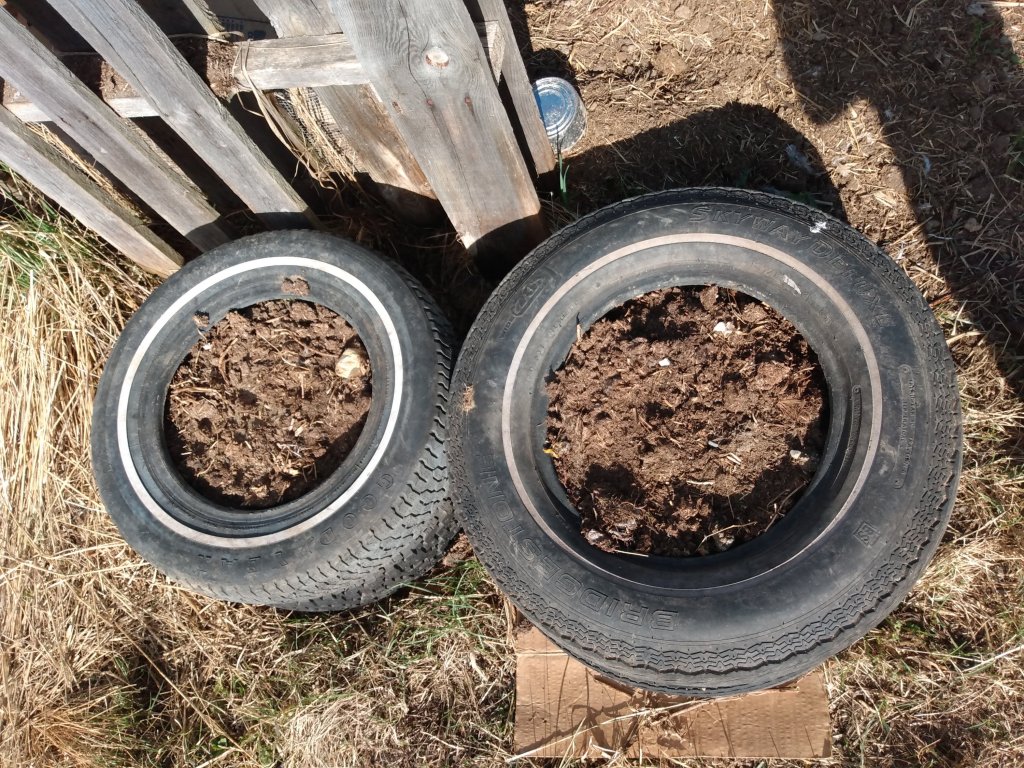
Potato tires next to the compost bin. These are golden fingerlings.
The first bed with soil added
Strawberry tires.

I’m very excited for Thing 1 and her goals of gardening and am trying to support her as much as possible but she really is doing most of the work so far. Plus she is carrying on the garden tradition of her Papa Alaska. Who certainly had it figured out with his two massive green thumbs.

We’re doing what we can to produce food for ourselves, in that old sourdough spirit.

For sourdoughs this seems like a no-brainer, old timers lived this way, every day. It was just normal life. When things broke, you fixed them. When they wore out you found a new purpose. When you didn’t have the resources, you cut back. In our age of modern convenience this is often a foreign concept.


Today’s climate of uncertainty, high inflation, product shortages and less expendable income might find yourself needing to make some adjustments. So, how do we apply this principle practically today? Here’s 8 ways to reduce, reuse, recycle & repurpose.


1. Take less to the dump.
Have a damaged chest: turn it into a wood bin or a flower bed? Furniture that you’re tired of, if there’s any life left consider donating it. If broken can it be repaired, by you or another person with proper skills/tools? Many of the dumped couches I’ve seen have been filthy and torn up from pets, not really functionally deficient. Performing regular maintenance and cleaning will help to keep your furniture functional for longer.
Too much trash? Can you separate burnables (paper, cardboard, tissue) and recycle it? Turn it into an art project, use it for animal bedding. Shred it and put into compost or build a worm composter let the little wigglers recycle it. Make fireplace logs from it. Recycle your aluminum cans or melt it down in a backyard forge for more homesteading fun!

2. Grow food instead of lawns.
Even a small patch of lawn can be used to supplement your household needs for food during the summer months. No lawn to spare? Consider container gardening or simple hydroponics if you don’t have much space. Growing your own food nourishes you twice, it nourishes your soul while tending the little growing plants then nourishes your body when you harvest. You don’t have to grow bushels or have a greenhouse to be productive! Use what you have!

3. Make it yourself
Learn a handcraft if you don’t already have skills like this. Crochet a potholder when you need one instead of buying a new Made in China model. Sew yourself some new curtains or maybe a quilt. Make your own bread or yogurt. Take a cooking class or better yet learn from an elder! Handmade cards and gifts are treasured around our house

4. Make do.
Need something like flower pots but can’t afford new at the store? Look around and see what containers you have sitting about. Remember the soup can you put into the trash? Paint it to decorate it if you’d like. Or tie some burlap and a ribbon around it for a shabby chic look. You can even cut the top off a soda/water bottle or milk jug for planting in. A cardboard box filled with dirt works well for one season. Old boots make great, whimsical flower pots! Get creative!

5. Hunt, Fish & Forage
All three are viable sources of food. Depending on your skill-set and available tools, most everyone can try at least one of these. Join a local garden club if you’re unsure. Befriend your green thumb neighbor and ask for growing help.

6. If it’s broke, fix it.
Car need new brakes or an oil change? YouTube is a great resource for leaning basic auto repair and maintenance. There are also books published for your specific make/model to tell you everything you need to know about your vehicle. One line of these books are called Chilton’s, you can find them at car parts stores, online and sometimes second hand. Remember, regular maintenance in your vehicle is crucial to keeping it in service as long as possible.
Jean’s knees torn out? Patch them. Zipper broke on your favorite jacket? Replace it, or find someone else to do it for you.
Some things are outside of our scope to be sure, but don’t be afraid to take on a task and learn a new skill. Besides potentially saving yourself some money you’ll gain satisfaction knowing you did it yourself.

7. Barter
Bartering, trading or swapping are great ways to procure goods when cash flow is low. You can always trade your time/labor for goods if you don’t have any goods to trade.

8. Consider different lifestyle choices.
This one gets a little personal, but no judgement, just something to ponder at night before you fall asleep.
When times are tough sometimes we have to consider options that we may never have thought we could do before. This can be a simple as riding a bike instead of driving. What about carpooling or limiting your trips? Instead of running to the store daily you could try once weekly shopping trips and buying in bulk. Cutting back on trips saves fuel expense as well as spending more money at whatever store you find yourself at.
With all this formula shortages going on, if you’re expecting, have you considered breastfeeding instead of formula feeding? It’s much more cost effective, and some say more convenient!
A big expense around here is communications. Cell phones, landlines, internet…what about getting by with one less cell phone? Have a “stay” family/home phone and a “go” phone instead of every family member having their own device. Cut the cable and put up an antenna for local channels. Cancel the Netflix, rent the occasional movie instead. Or better yet, read a book.
Are you a smoker? Besides the obvious quiting the habit, you could cut back. Instead of reaching for that next smoke, every other craving get up and go for a walk or any other activity to retrain your brain. Reducing your consumption is both economical and good for your health! Which will also save you in future medical expenses.

It’s usually during times of hardship that we are reminded about simpler days, when less is more. Sometimes we can get by with a little less & make do. Who knows, you might just find a little satisfaction in being more self sufficient! If you’re not careful, you just might turn into a sourdough.

Long ago before the advent of TVs, radio & Internet, folks had to do things to keep themselves busy. The idea of just sitting around doing nothing was quite foreign to most. Whilst reading books is always an admirable past time, making useful or decorative things was as well. From knitting to crochet, sewing and needlepoint to tatting, many things could be made over the course of a long cold winter.

Knitting and crochet could provide one with some warm socks, cozy sweaters, scarfs & blankets. Sewing certainly was a necessity, repairing garments and making new ones. Needlepoint, tatting & beading were definitely for embellishments and gussying up one’s home. The time honored Alaskan tradition of beautifying garments with beadwork is beyond compare.

For hundreds (thousands) of years these handcrafted arts have survived. I imagine most folks know someone (or they themselves) who can knit or crochet. Especially after the long COVID winters of the past two years, handicrafts have seen a resurgence. Hand sewing is an art not seen too often with the advent of machines but still around. Sewing, no matter the manner, remains a very useful craft to know. Even sourdoughs could appreciate the beauty of a pair of beaded fur lined mittens or a bit of tatted lace on a blouse’s collar.

As a child I learned to crochet from my Great Aunt Arta. She was left-handed and I learned by sitting in front of her on the floor and copying her hand movements. Thus I hold my crochet hook underhand and interesting enough, the same way my Great Grandmother held hers (according to my Grandmother, all three of blessed memory). Many of my fondest childhood memories involve making something with her.

My Great Grandmother tatted but none of her daughters learned the craft from her. I wasn’t even aware of it’s existence before meeting a lady by the name of Althea Barth while living in Idaho.

She was older than my Grandmother but younger than my Great Grand would have been. She had an enormous library of handcraft books. Lady’s journals from the 50s & 60s that I swooned over. I made copious copies of all the lovely things I wanted to crochet! Althea taught me to tat using a shuttle. Upon gifting some pieces to my Grandmother she informed me of the link to my Great Grandmother. Serendipity!

She told me that during the Great Depression when tatting thread wasn’t available or affordable, Great Grandma would tat with sewing thread. Now that’s some dedication and fine detail work!

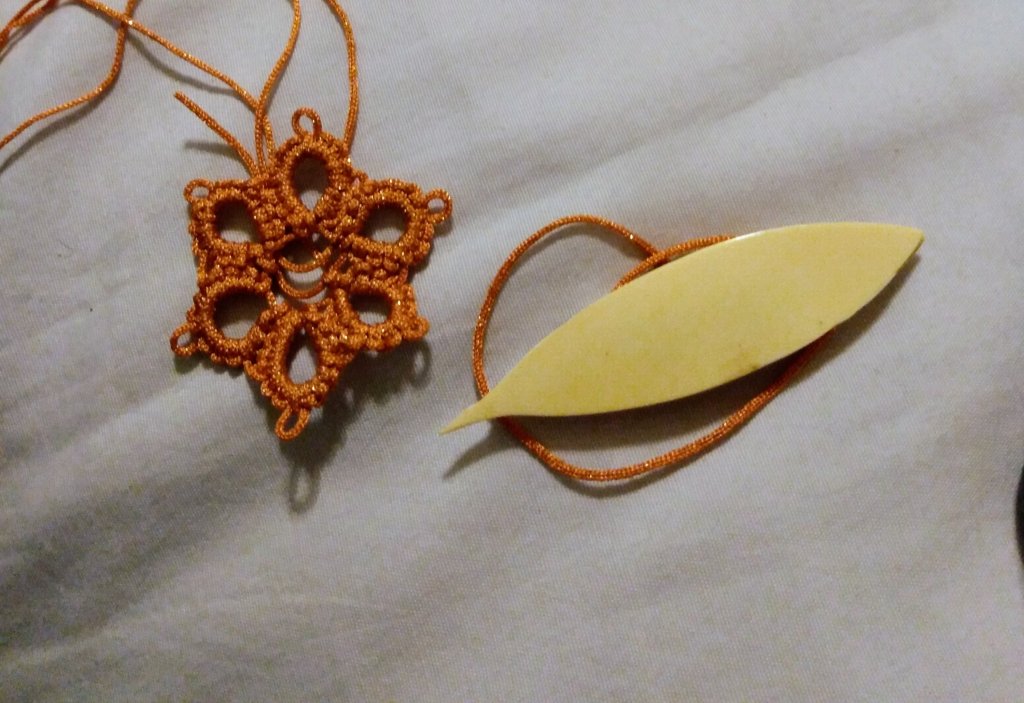
A tatted motif & my Great Grandmother’s shuttle.

I enjoyed learning the art and besides the wonderful friendship I had with Althea, it brought me a new connection to my Great Grandmother. I encourage everyone to make friends with some of your elders, sit with them, learn from them, share your life with them. The rewards are many.

I can imagine many an old sourdough man or woman knitting besides the warm stove in the dead of winter. Donning a snuggly scarf when going out to haul in wood. Or cozy socks in worn old leather boots. And maybe a tatted lace doily under the one prized little knick-knack sitting on the shelf.

Carrying on these time honored traditions brings me great joy. I hope one day my kids will want to learn some if not all if them!

This post is dedicated to my Mother, her Mother and her Mother, my ancestral mother’s. Who’ve handed down much to me both genetically, historically and relationally. Happy Mother’s Day! ❤️🤍🤍

The weather is holding out a bit longer but the gray sky above the house isn’t promising. We’ve got home improvements to do and gardening prep to absolutely get done today. Winter is coming!

There’s no time for research & writing today, I’ve got other work to do… For starters, replacing a defective upstairs window. We’ve put it off long enough. When you open the existing window the very heavy bottom half falls out. It’s not too user friendly on hot summer days.

That’s 16′ to the bottom of the window, 20′ to the top.

Dean’s on the crazy crew, three stacks of scaffolding…. I’m working from the inside.

New window, slightly smaller due to original being nonstandard size. Making do.

There, that’s better.

Now on to the garden bed building for Thing 1’s horticultural/botany project. She has her garden all planned out. From her 5 raised beds, to potato tire stacks, container blueberries, a new strawberry bed, a second compost bin and the green house space. Next project is to recover the greenhouse with plastic & fix the fence.

Thing 1’s first of five plotted raised beds. It will be hugelkulture style. As soon as the dirt pile is thawed enough to move dirt.

Then to address the annual run off from snow melt that inundates our foundation.

My Lil helper setting our drain system in place.

Lil Mister was a big help today. He shoveled out the ditch right beside me then helped fill it back in.

Covered up.

Whew, I’m tired. It’s time for some R&R, oh wait, I need to go grocery shopping for the next two weeks. Oy. And then cook dinner.

Ok, food is bought, dinner is cooked and I am off duty. Good night folks!

How is it Sunday already? Weekends tend to fly by once the snow starts to melt. So much to do outside, long days and whelp, there’s another weekend gone.

Once winter is gone what do we do? Get ready for next winter!

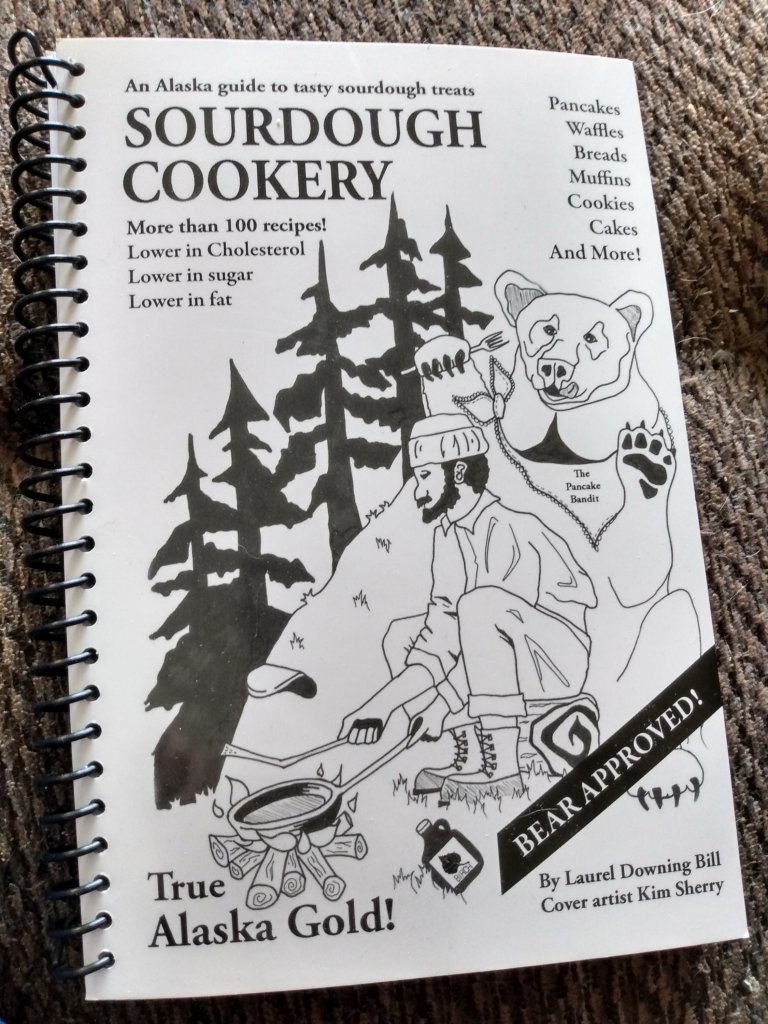
In the midst of prepping for winter, I stumbled upon a gem of a cookbook.

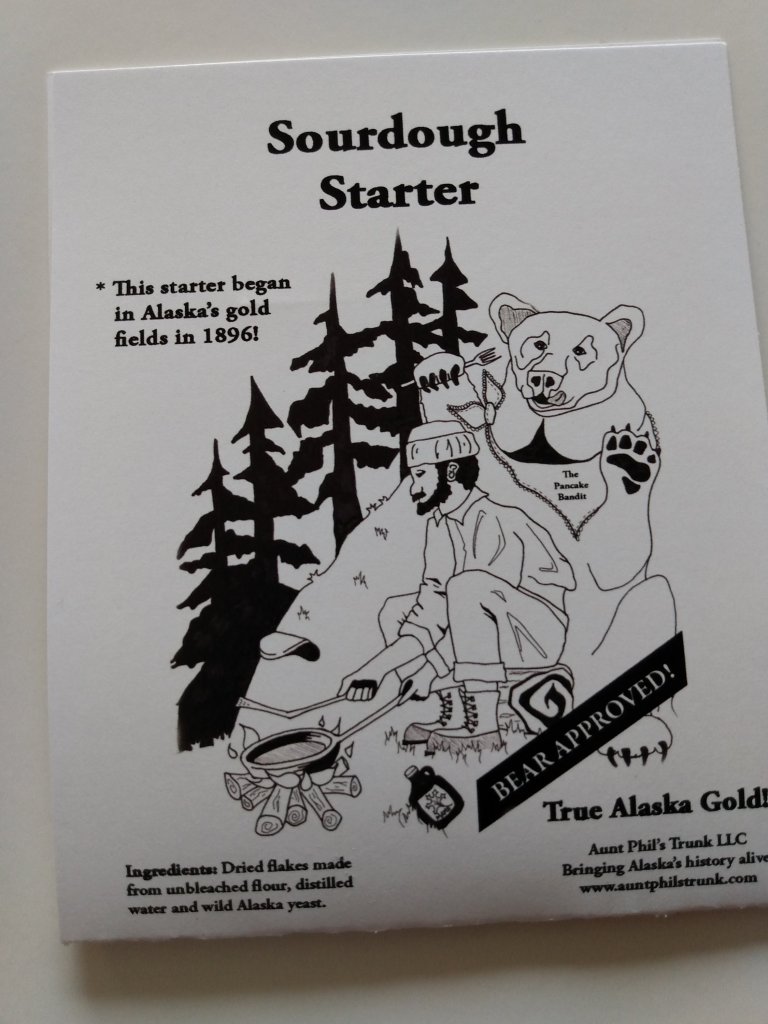
Along with the book you get a real sourdough starter too!

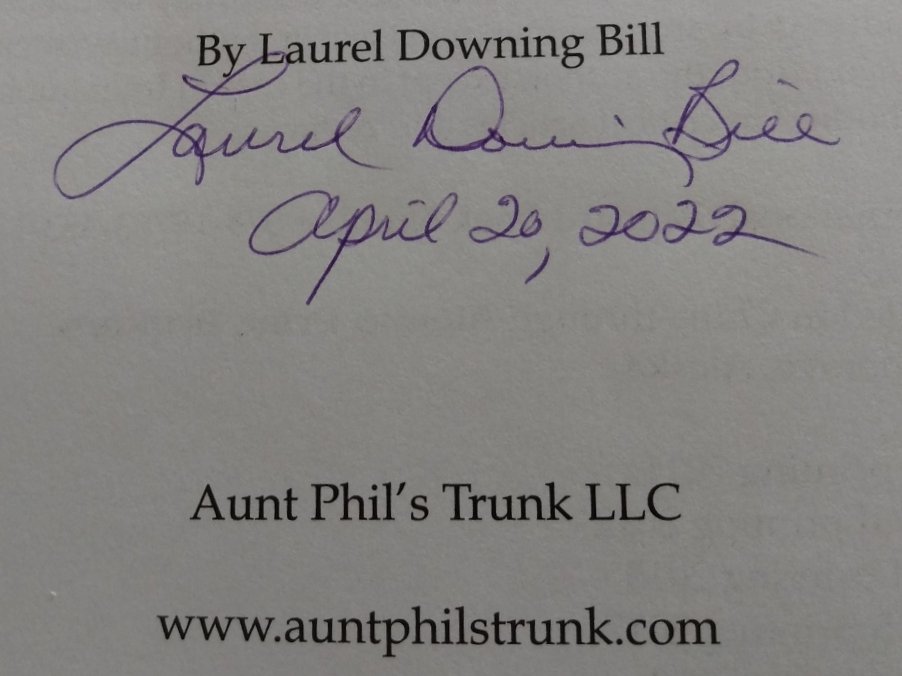
Of course I just had to add this book to our library. I’m familiar with the author and, true to her style, there are plenty of photos of yesteryear and local Alaskan lore along with delicious sourdough recipes.

Everything you need to know about starting, maintaining and using sourdough. Rising & baking tips, ingredient alternatives and even a dog biscuit recipe! I’m sure Panda Bear will volunteer to taste test.

You can order a copy here.

What foods did sourdoughs eat I wonder?? So I did some prospecting for information nuggets and found some interesting factoids. Besides the well-known home made cakes & breads, we know that Sourdough’s ate a lot of salted meat, hardtack and whatever else local foods they could muster.

Around here, we incorporate traditionally harvested foods in our daily diets. Unlike the traditional Native Alaskan subsistence culture & to some extent, Sourdoughs of the past, our diet isn’t solely based on these foods, but an interesting addition. Except for salmon, that’s an integral part of our diet.

Some years we simply don’t get a harvest of certain foods. Like mushrooms. We may hunt and hunt for morels and just not find more than a meal’s worth. Or we may not be able to go out and hunt at all. But we don’t starve because of it.

Some years we gather a large amount of berries, one variety or another. Last year it was low-bush cranberries, the year before it was raspberries… Then the jams and jellies will be plentiful. And a few tasty desserts. But if we don’t gather any, we don’t starve.

Some years we get a moose, other years we don’t. But, you guessed it, we don’t starve. We make due with what we have and the local grocery stores & a farmer here and there. We have this security and conveniennce that Sourdough’s of the past did not have. Life is less stressful during most years due to this convenience.

Now, add in a couple of years of supply shortages and outages plus sky high inflation, suddenly supplementing our diets with foraged foods becomes more of a necessity for modern wannabe sourdoughs.

Like those leathery old souls of yesteryear, we’re eating things like moose stew and salmon cooked every which way you can. We’re making sourdough bread and capturing Birch sap to add as many varied vitamins, minerals & nutrients to our diet as possible. And flavors. It’s important to have variety.

We’ll be looking for those first shoots of ferns, fiddleheads as they are called, and fireweed shoots. Perhaps we’ll get our timing right for horsetail shoots as well. All of these “spring tonics” to help get the sluggish winter gunk out of our systems and jumpstart us for summer’s busy schedule.

Then we’ll be harvesting dandelions en masse for jellies and maybe a fried blossom or two. Throwing a few greens into our salads. We’ll be drinking “pineapple weed” and spruce tip teas. Both can be made into tasty jellies as well. Then it will be salmon harvest time. You know where to find us then 🤣

We may do things differently than our forebearers did but I guarantee you that we are eating some of the same things. Mostly we are eating Alaska. And being ever so thankful for her abundance. B’H!

Moose Stew

I make moose stew two ways, fresh or with canned moose. I’ll share both with you here.

Start with a pound or two of chopped moose meat, brown in a cast iron dutch oven with plenty of fat (use what you have: oil, butter, tallow, etc).

Once browned and smelling delicious, add to the pot 2 qts of liquid, make due here with broth or water. Two- three large potatoes chopped into bite-sized nuggets. Three or four large Alaska grown carrots or make due with any old local variety, by local I mean imported from hundreds or thousands of miles away. Toss into the pot whatever seasonings you have: garlic, bay leaf, salt & pepper, celery seed or salt, cayenne, Worcestershire sauce, or a Cajun spice blend if you’re so lucky to have. Bring it to a boil. Reduce heat and simmer for hours until meat and veggies are tender. Better if you place it on top of the woodstove in the winter, and let it slow cook all day.

After the meat and veggies are done you can either eat as is, soup style or add some thickener for a more traditional stew. I usually prefer cornstarch since it’s gluten free. Make a slurry with about a 1/4 cup of cornstarch and enough water to dissolve it all. Mix it up and pour into your simmering pot of Stew. Stir and cook until the soup is thick and clear, not cloudy from the cornstarch.

You can also thicken with wheat flour in a similar manner. Your stew will have a more opaque appearance then with a clear cornstarch based sauce. It also will not be gluten free then, but if that’s no matter to you, then by all means, carry on!

Usually I make stew with canned moose meat and veggies. I think the moose tastes much better plus half the work is already done. Besides being a quick meal, it’s what we have in the pantry.

To a large Dutch oven add 2 jars moose meat, 2 cans carrots and 2 cans potatoes, season to taste as above recipe dictates and heat through. Once heated, add thickener of choice and cook until thick and hearty. Serve with sourdough rolls, hardtack, pilot bread or matzos if the timing is right. Enjoy!

Dwellings are a very important part of Sourdough Culture. We are fortunate to have a collection of historic cabins in this area. Kenai Kasilof, & Soldotna all have cabin parks, cabin museums and other preserved buildings.

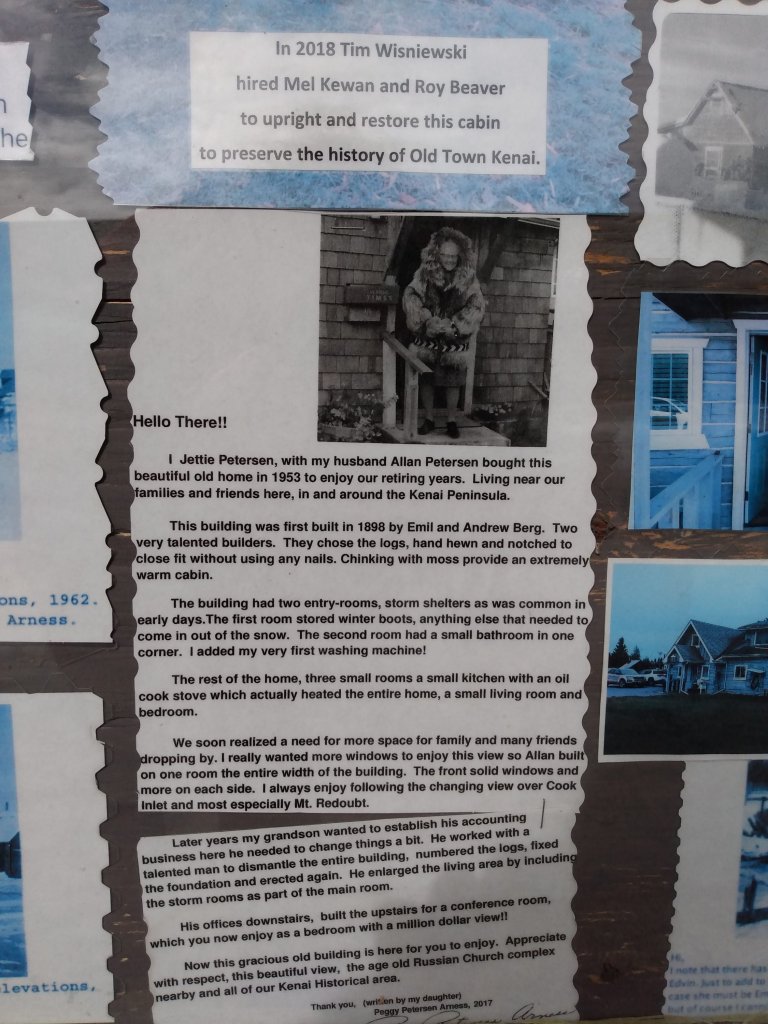
Dean & I have done two historic cabin repairs over the years. Recently we restored a roof on a cabin in Kenai. Several years ago we replaced a rotten base log in a cabin in Soldotna’s Cabin Park. We have to be careful to keep historically accurate in our repairs.

I enjoy working on these old buildings. I’m touching wood, trees that were living in the 1800’s. It’s standing history that I get to play a tiny role in protecting. Think about all the happenings that these buildings survived. Everyday human events, epic volcanic eruptions. The biggest earthquake in Alaska’s history. Three major cultures: local first peoples the Dena ‘ina Athabascan, Russian traders and settlers, then other English speaking settlers evolving into Americans. All have left their indelible marks locally.

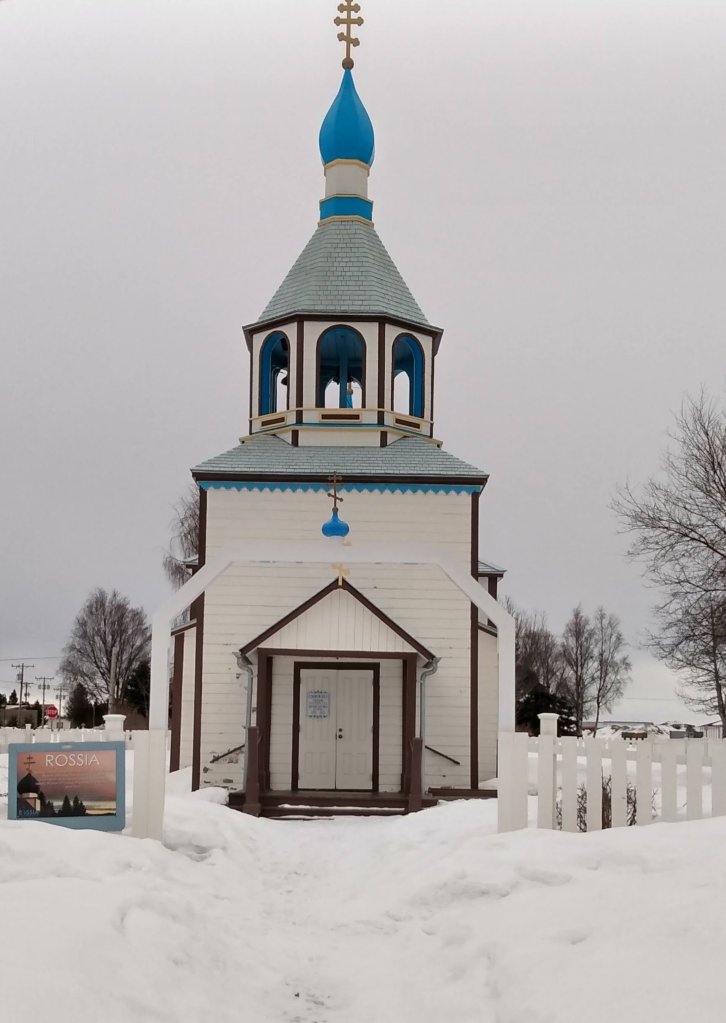
1896 Russian Orthodox Church,
Old Towne Kenai, Alaska.

Often you can still see the cut marks from hand hewing. And the craftsmanship is always an adventure. I love the dovetailed corners on many of these old cabins. Some have no spikes holding them together only joinery. Chinked with moss or mud, long gone over with the passing of time. Some have been restored and continue as dwellings today. Others are preserved for posterity, lest we forget where we came from.

Corner joinery detail at Veronica’s Cafe. Another historic cabin in Kenai.

In the era these old cabins were built, there were no lumberyards or metal shops around. Trees were cut and hewn for walls and roof supports but there’s nothing suitable for sheathing. So these resilient old souls hauled sod up and covered their roofs with living material. Complete with wildflowers. This shed the weather reasonably well and kept the cabins warm in the winter, cool in the summer.

1898 cabin with similar corner dovetails.

Another standout detail of these old homes was the overall height. These buildings were shorter than typical modern buildings. Doors between 4-5 feet tall, walls under 8′, often 6′ or shorter. Materials to build were hard to come by, it took brute strength and a lot of elbow grease to build. So making shorter buildings helped conserve energy. Mostly these smaller structures were easier to keep warm. After all, you really only needed a space for your meager belongings, a bed to sleep in, some place for your dogs and stay out of the severe cold.

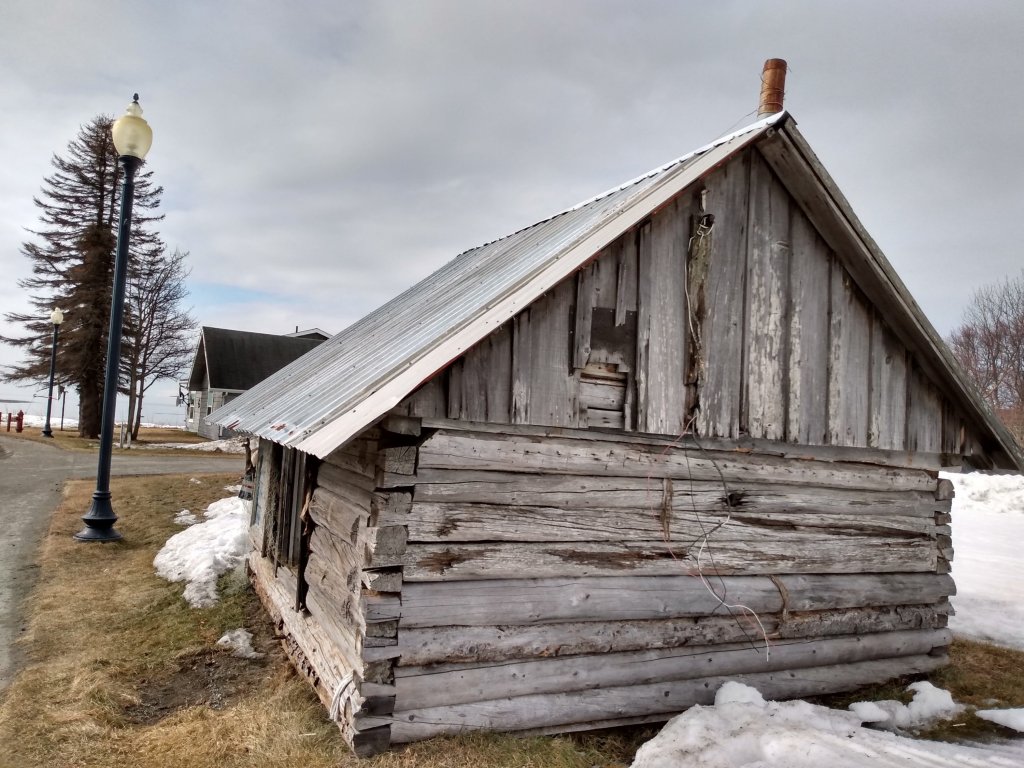
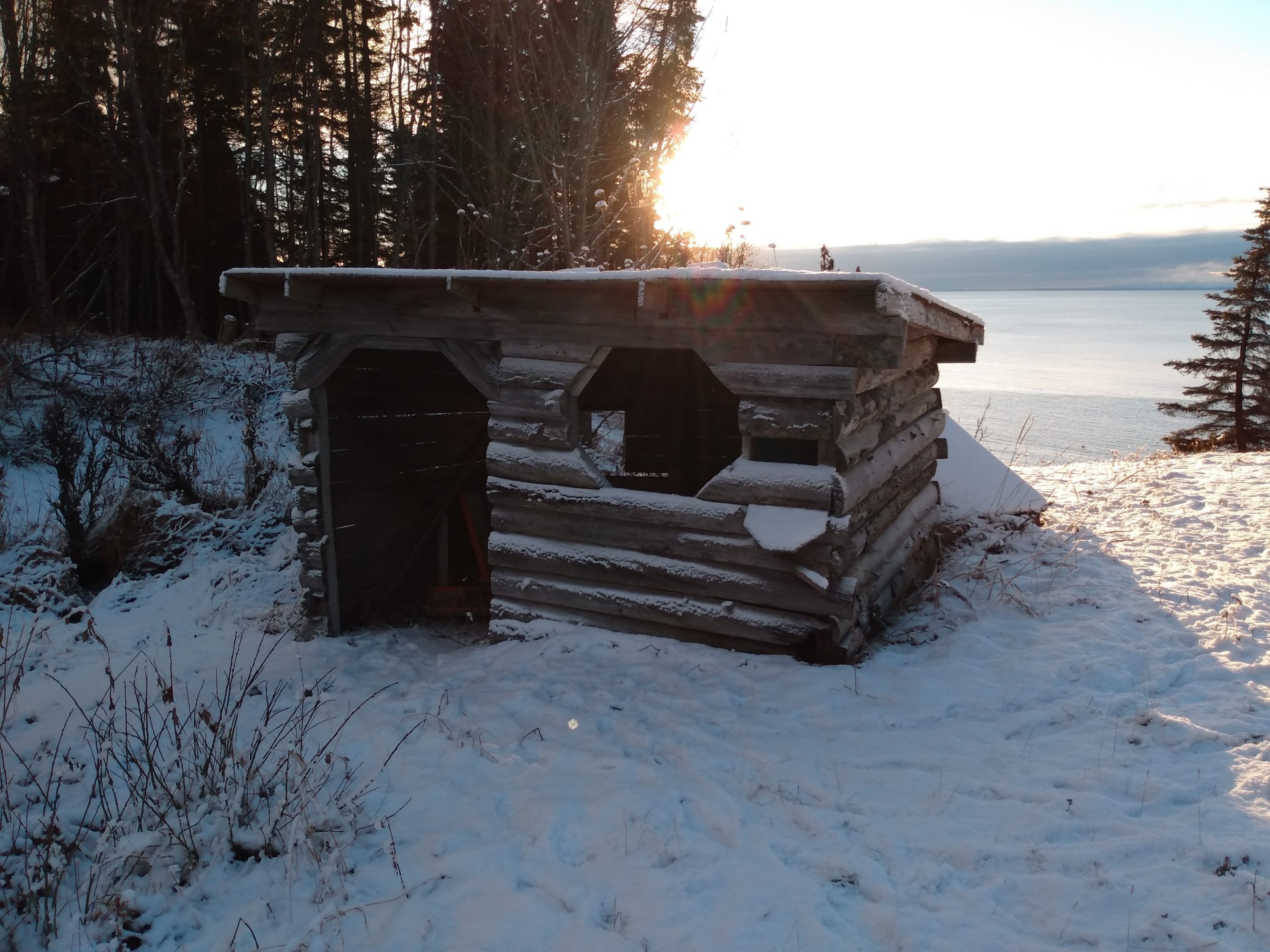
Homestead shed, used to have a sod roof. Just about to become the latest victim of bluff erosion.
The cabin we repaired, looking good as new, err, I mean good as old.
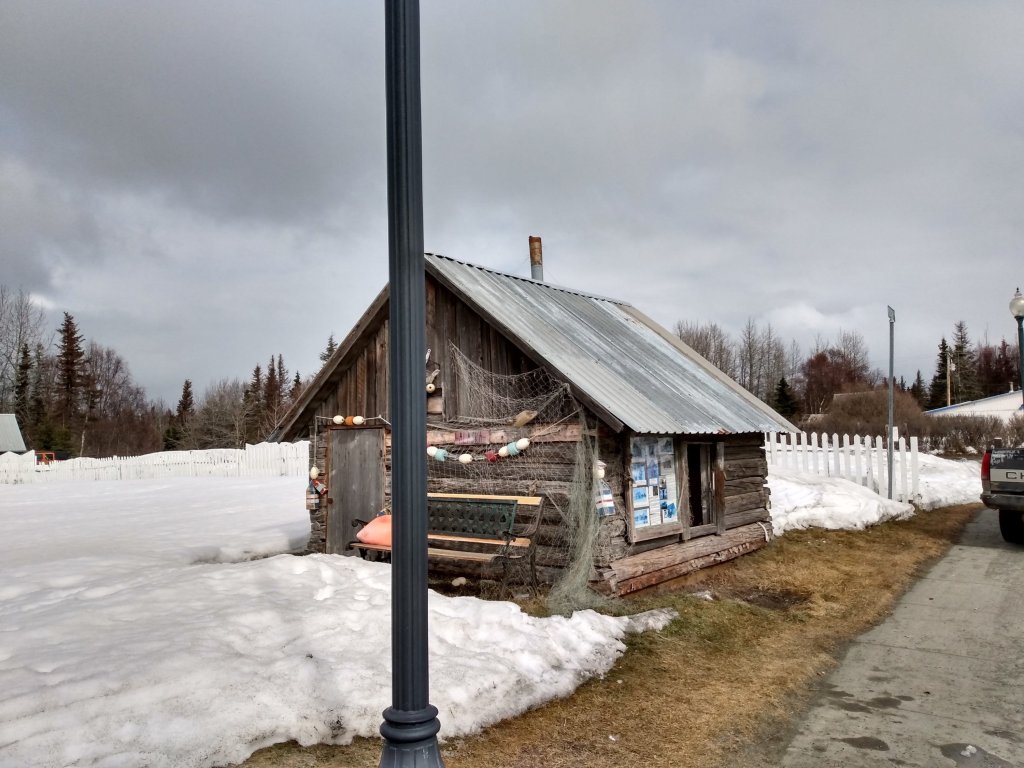
History of this little cabin.

Hand hewn cabins are one of my greatest loves in architecture. Our modern day construction technology may be different but the same love and care goes into each log I prep for a cabin I’m building.

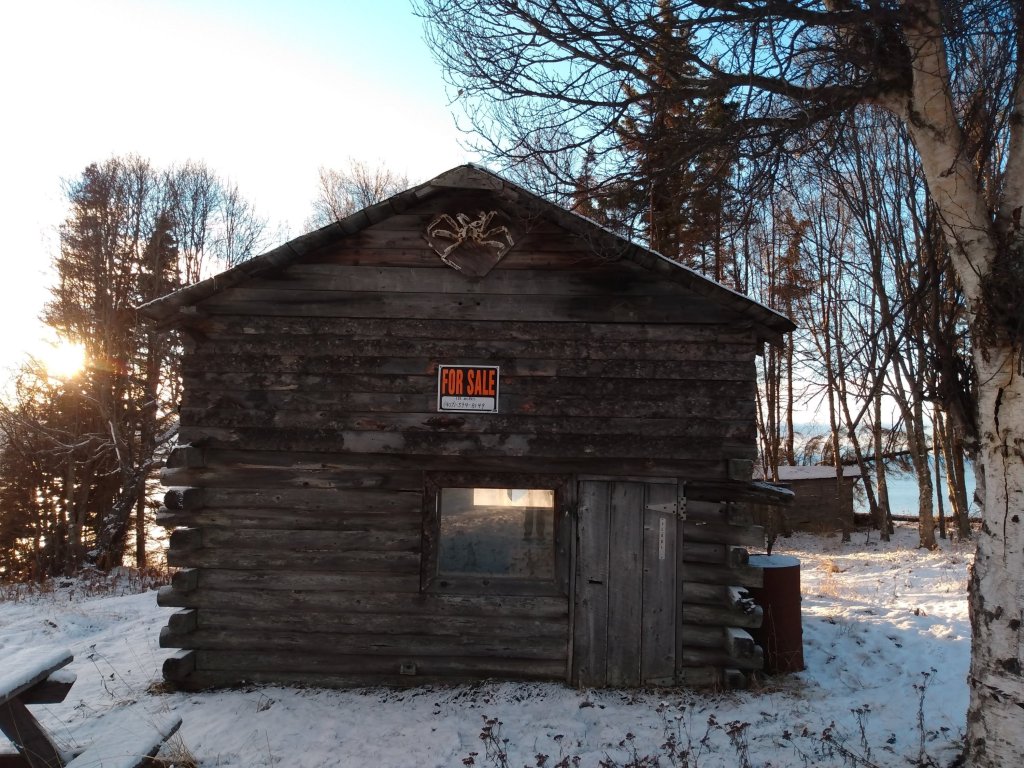
An old homestead cabin near Nikiski. Complete with sleeping loft and a king crab carapace.

Officially this is my sixth post in this series, month number two. I’ve definitely spent some time researching for these posts and learning new things along the way. There are a few books I’ve discovered that I’d like to read. But I digress.

Mostly during my research I find a lot, a tremendous amount really, of information about sourdough starters, and breads

I used to have my very own gluten free sourdough starter and enjoyed so many tasty morsels made with it. Pancakes probably topped the list. There’s just nothing like a sourdough pancake hot off the cast iron, with a big ol pat of real butter and real maple syrup drizzled over the steaming cake. Oh my.

I’ve tried to get new gf starters going here but for whatever reason, I’ve simply failed miserably. User error, weird wild yeasts, mold, flies, whatever, no good working starter for me.

Recently, our friend Barbara gave Thing 1 a wheat flour based starter and she’s excited to start her own tradition of keeping a starter. I’m excited for her even tho I won’t be enjoying it myself.

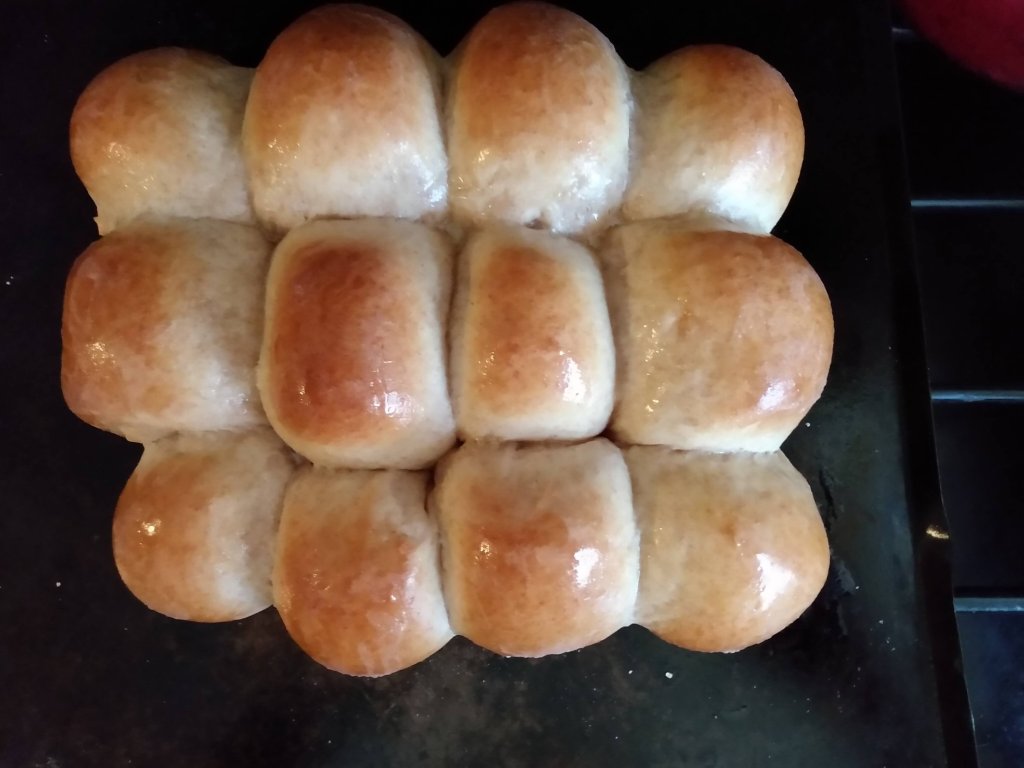
She’s made two batches of dinner rolls with her starter so far. I must say the house does smell delicious when they are baking.

Her second batch of rolls.

Everyone loves them.

Everyone but me, of course, not by choice.

I’m glad to have influenced another generation of humans to experience and fall in love with the tradition of sourdough. Also glad to know they are eating something wholesome and preservative free.

If you’d like to try your own hand at sourdough there’s a few ways to go about it. Find a friend with an active starter and get a bit from them to grow your own. You could buy a starter from an online source. Here’s an Alaskan version. Or you can mix up your own from scratch. Here’s a recipe link.

Just remember, there’s no store bought packaged yeast in a true sourdough starter. It’s basically just flour and pure water (no chlorine or treated water). You’re capturing wild yeasts in the air to build your starter with. This is what gives it the distinct flavors of your local area. If you do build a starter with packaged yeast that’s okay to begin with. Just give it a try. Once you master the feeding and use cycles, try capturing a wild strain! Then you can compare and see if you can tell the difference & which you prefer!

I hope you give it a try! Drop me a line if you do! Happy sourdoughing!

One thing a sourdough usually has is time to ponder. Generally in the darkness of winter, when there’s little else to do.

Since I embarked on this series I’ve spent some time pondering what being a sourdough means to me. I suppose it starts with a grandiose sense of adventure, with a stubborn persistence bordering on the insane. More than a can-do, but a will-do-or-be-damned spirit, the sort of determination you don’t run into every day.
If one is successful and survives their first Alaskan winter, (and doesn’t high-tail it for the lower 48,) they begin to shift into a more refined sense of adventure and wonder but still plenty stubborn and maybe a little cantankerous now. One’s mind will be full of a new found respect for Alaska’s fierceness and unpredictability. Hopefully, if said stubborn person is wise, they develop a better prepared can-do spirit that begins to ready for the winter right after break-up. It’s like feeding the sourdough and keeping it warm, it takes diligence and constant care to keep it going.
Get ready, “winter is coming” is their mantra.
After each winter survival the individual acquires more character and unique qualities, not unlike sourdough starter..
Before long they may even start to smell like a sourdough. Much to the shaggrin of the city folk. No worry, by this time, there’s not a care left in the world for what others think.

Time passes, and there’s no real measurement for this period as it varies with each sourdough, at some point the sourdough is perfected, working in harmony with Nature, ebbing and flowing with Her tides. Full of wisdom from experience, maybe not so full of themselves and their abilities but quietly confident & determined. Or maybe damned proud of themselves and more feisty for it. Either way, they’ll be quite content in their own existence.
It’s taken failure upon failure, possibly even a near death experience or two and quite a collection of “awes” and wonders to get here. There will have been a plethora of lessons learned. Many annoyances experienced. Lots of paths crossed and one or two well worn.
It’s a work in progress. A neverending tending to keep your culture. It’s a lifestyle, a journey.