

-
What else has been going on around here…
- Twenty-One January 29, 2026
- Nostalgia January 8, 2026
- We Made It! December 22, 2025
- We Make Do, So Can You! November 2, 2025
- Twice in 3 Days October 31, 2025
Archives
Categories
Moments in Time
March 2026 S M T W T F S 1 2 3 4 5 6 7 8 9 10 11 12 13 14 15 16 17 18 19 20 21 22 23 24 25 26 27 28 29 30 31
Tag Archives: foraging
It was a short week, 6 days ago, that I tapped our Birch tree. I probably could have tapped it a few days earlier if not for just being too busy. But better some sap than none!
With the speed of the melting snow the Birch sap has slowed it’s flow.
Me
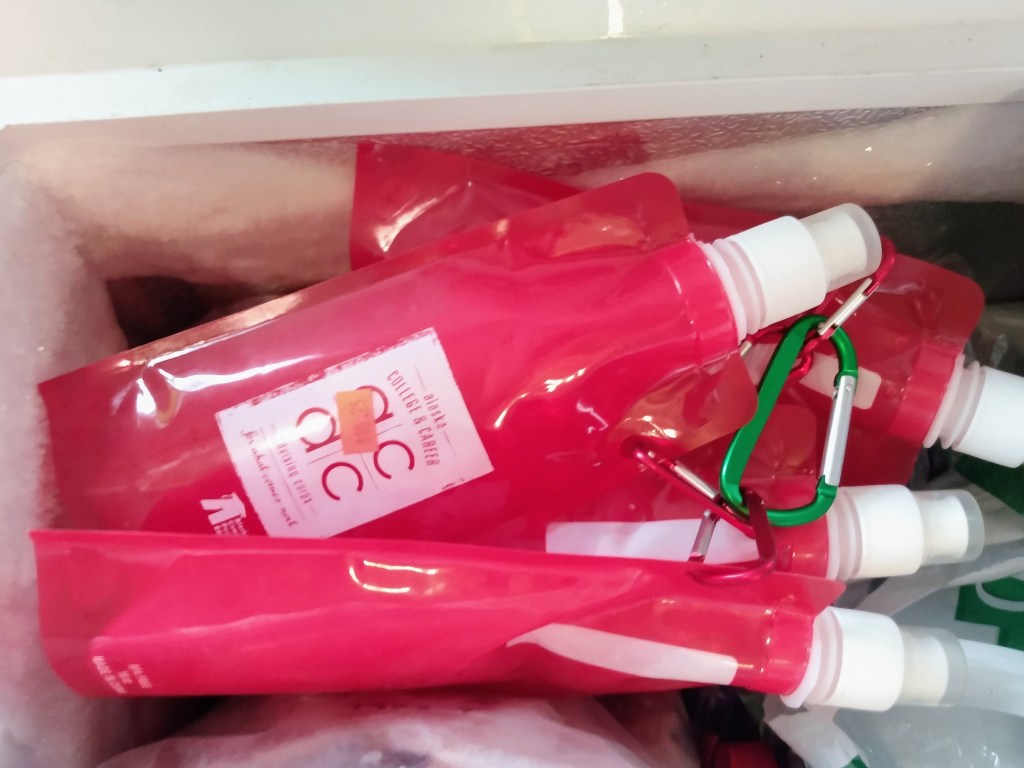
Our first gallon I poured into individual collapsible water bottles for drinking later. I found these new at the thrift store, a great find! They came with mini carabineers to clip onto your pack or belt while hiking this summer. Into the freezers they went.
Next, I used 3.5 gallons to try our version of Birch Beer, similar to root beer, and made about 3/4 of a gallon of flavored concentrate. I slow-simmered the sap in my turkey roaster until about half with a few Birch twigs. Once done I turned off the heat, added a vanilla bean and cinnamon stick and 1/2 cup xylitol to sweeten it a bit more. To serve, pour concentrate into a glass, half full, add a squeeze of fresh lime, a little more sweetener (to individual taste) and top off with seltzer. It’s got an earthy taste, faintly reminiscent of a root beer but not as herbal. I like mine less sweet, the kids like it more sweet. But they like it, that’s good.
It’s nice to have a natural soda alternative that’s not 44 grams of sugar per serving or full of who knows what.
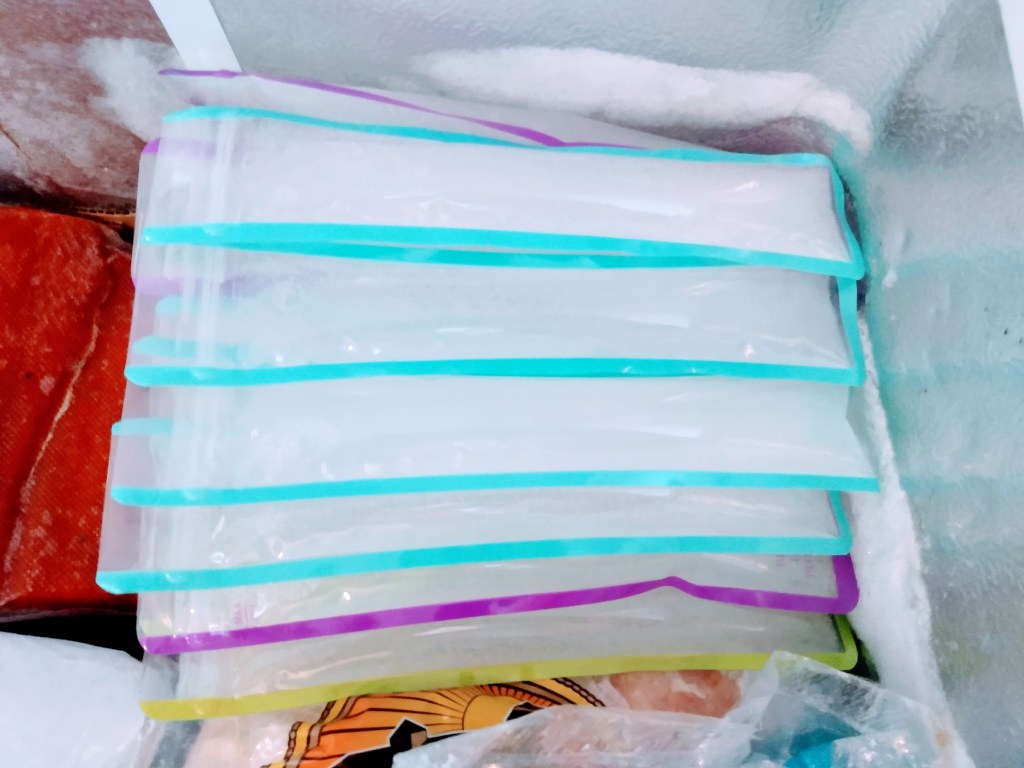
I also put about half a gallon into some reusable popsicles for a cold summer treat. I made 20 of these, Alaskan style Otter Pops, all natural, no artificial dyes, flavors or sweeteners.
I did learn that we have another native tree here that can also be tapped: Alder. I experimented and tapped a couple larger trunks (they aren’t very big here, 3-5 inches in diameter). I wasn’t set-up properly for collecting the sap so missed a lot. I did get enough to taste it. It’s similar to the Birch water, less flavor tho. Overall good to know in an emergency but not likely to try it annually.
What remains of our harvest is apx 3.5 gallons, which I’ll turn into ice cubes and jugs of sap to freeze and use later. I’m going to try brining my salmon in Birch sap and salt this summer.
Overall we harvested about 9 gallons from a single Birch tree in 6 days, 1.5 gallons a day on average. This is important to know if we want to harvest enough for a larger batch of syrup or beverages. Since Birch water doesn’t keep for more than a couple days without spoiling, it has to be used or frozen quickly. So if we needed 5 gallons to process into wine we would need to tap 4-5 trees for a larger daily quantity.
I pulled the spile early Saturday morning. And another foraging season has come & gone.
Next up for wildcrafting is cottonwood buds, fiddleheads, fireweed shoots, spruce tips and morels. Oh boy, I can’t wait!! So much to do, so little time!
I’ve mentioned previously how local foods were vital to a healthy sourdough’s diet so I’ll get right to the subject of this week’s post: Fiddleheads!
For years Thing 1 and I have been meaning to harvest fiddleheads. And each year we somehow miss the short window of opportunity. But not this year!
Scouting through the woods yesterday I noticed most of the ferns were up and thought I’d missed out yet again. But halfway through our hike I found a bottom area full of fiddleheads. So I refreshed my memory on safe harvesting and planned to go out first thing in the morning to provide the mosquitos breakfast & pick some.
All of the ferns I observed are Lady Ferns. Ostrich ferns are supposed to grow in this region too but I didn’t locate any.
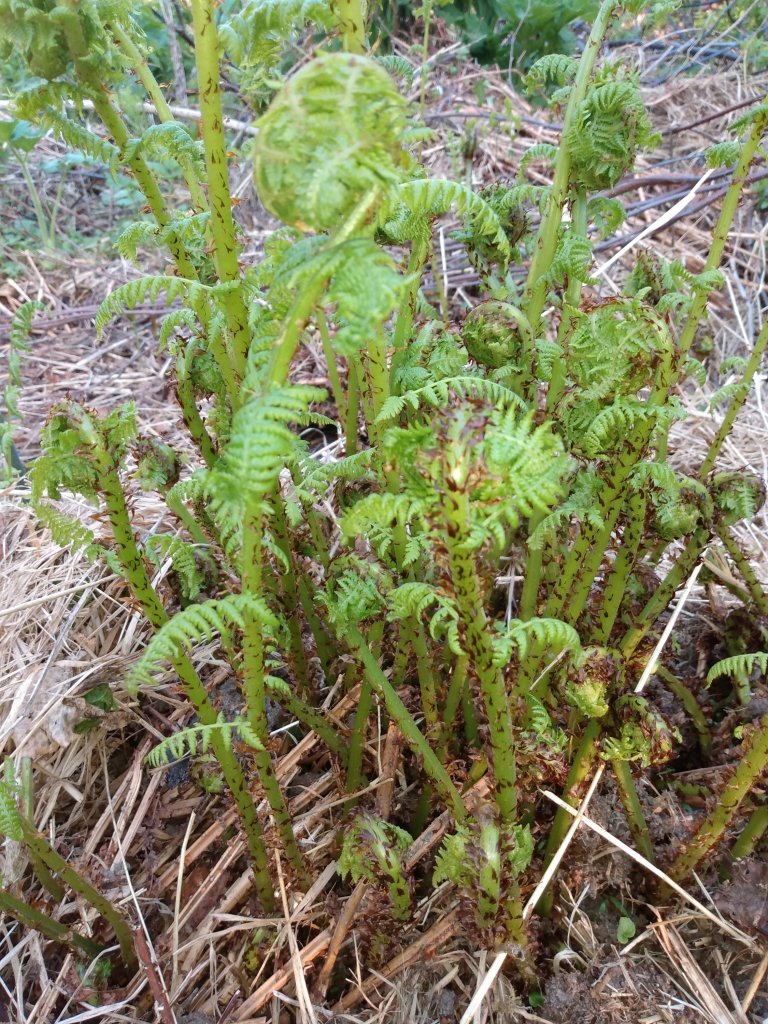
I picked enough to try a batch of pickled Fiddleheads. We’ll see if we like them. Then next year we can harvest more. There’s been no harvest pressure on these ferns plus there’s plenty for us to chose from.
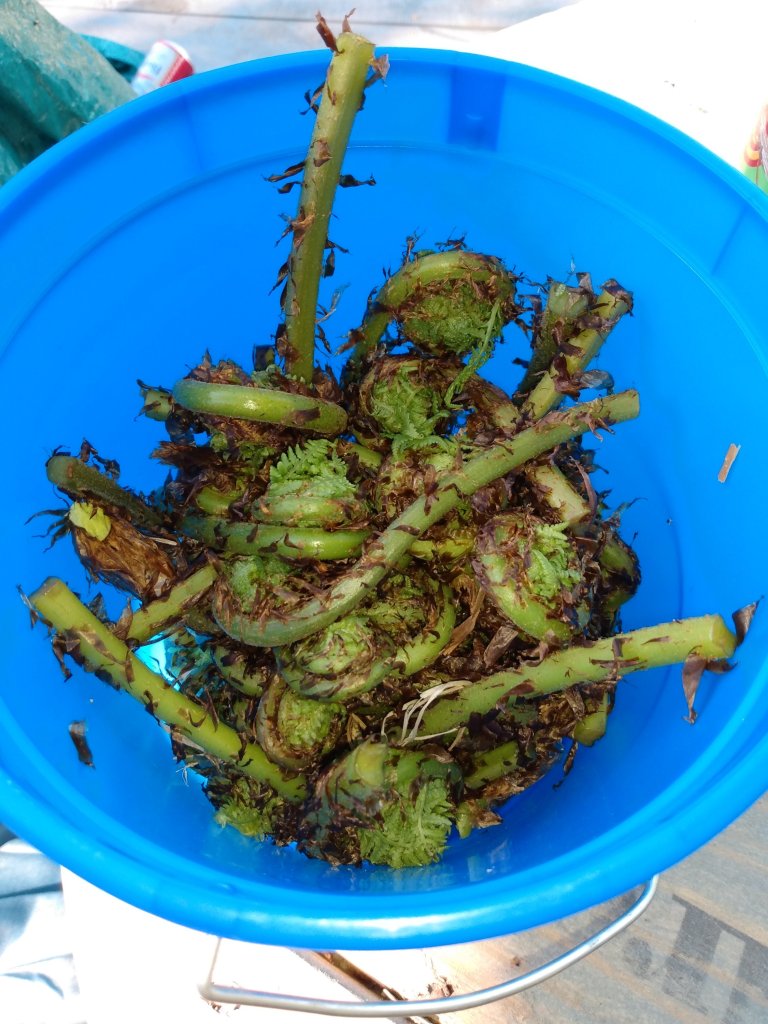
I sauteed a couple to try them and I love ’em!! Can’t wait to pickle the rest for a longer lasting treat!
I’m going to be in the lookout for Ostrich ferns too.
Resources:
Click to access Fiddleheads.pdf
Harvesting Wild Fiddlehead Ferns in Alaska
I am a Fiddlehead Forager | INDIE ALASKA
What foods did sourdoughs eat I wonder?? So I did some prospecting for information nuggets and found some interesting factoids. Besides the well-known home made cakes & breads, we know that Sourdough’s ate a lot of salted meat, hardtack and whatever else local foods they could muster.
Around here, we incorporate traditionally harvested foods in our daily diets. Unlike the traditional Native Alaskan subsistence culture & to some extent, Sourdoughs of the past, our diet isn’t solely based on these foods, but an interesting addition. Except for salmon, that’s an integral part of our diet.
Some years we simply don’t get a harvest of certain foods. Like mushrooms. We may hunt and hunt for morels and just not find more than a meal’s worth. Or we may not be able to go out and hunt at all. But we don’t starve because of it.
Some years we gather a large amount of berries, one variety or another. Last year it was low-bush cranberries, the year before it was raspberries… Then the jams and jellies will be plentiful. And a few tasty desserts. But if we don’t gather any, we don’t starve.
Some years we get a moose, other years we don’t. But, you guessed it, we don’t starve. We make due with what we have and the local grocery stores & a farmer here and there. We have this security and conveniennce that Sourdough’s of the past did not have. Life is less stressful during most years due to this convenience.
Now, add in a couple of years of supply shortages and outages plus sky high inflation, suddenly supplementing our diets with foraged foods becomes more of a necessity for modern wannabe sourdoughs.
Like those leathery old souls of yesteryear, we’re eating things like moose stew and salmon cooked every which way you can. We’re making sourdough bread and capturing Birch sap to add as many varied vitamins, minerals & nutrients to our diet as possible. And flavors. It’s important to have variety.
We’ll be looking for those first shoots of ferns, fiddleheads as they are called, and fireweed shoots. Perhaps we’ll get our timing right for horsetail shoots as well. All of these “spring tonics” to help get the sluggish winter gunk out of our systems and jumpstart us for summer’s busy schedule.
Then we’ll be harvesting dandelions en masse for jellies and maybe a fried blossom or two. Throwing a few greens into our salads. We’ll be drinking “pineapple weed” and spruce tip teas. Both can be made into tasty jellies as well. Then it will be salmon harvest time. You know where to find us then 🤣
We may do things differently than our forebearers did but I guarantee you that we are eating some of the same things. Mostly we are eating Alaska. And being ever so thankful for her abundance. B’H!
Moose Stew
I make moose stew two ways, fresh or with canned moose. I’ll share both with you here.
Start with a pound or two of chopped moose meat, brown in a cast iron dutch oven with plenty of fat (use what you have: oil, butter, tallow, etc).
Once browned and smelling delicious, add to the pot 2 qts of liquid, make due here with broth or water. Two- three large potatoes chopped into bite-sized nuggets. Three or four large Alaska grown carrots or make due with any old local variety, by local I mean imported from hundreds or thousands of miles away. Toss into the pot whatever seasonings you have: garlic, bay leaf, salt & pepper, celery seed or salt, cayenne, Worcestershire sauce, or a Cajun spice blend if you’re so lucky to have. Bring it to a boil. Reduce heat and simmer for hours until meat and veggies are tender. Better if you place it on top of the woodstove in the winter, and let it slow cook all day.
After the meat and veggies are done you can either eat as is, soup style or add some thickener for a more traditional stew. I usually prefer cornstarch since it’s gluten free. Make a slurry with about a 1/4 cup of cornstarch and enough water to dissolve it all. Mix it up and pour into your simmering pot of Stew. Stir and cook until the soup is thick and clear, not cloudy from the cornstarch.
You can also thicken with wheat flour in a similar manner. Your stew will have a more opaque appearance then with a clear cornstarch based sauce. It also will not be gluten free then, but if that’s no matter to you, then by all means, carry on!
Usually I make stew with canned moose meat and veggies. I think the moose tastes much better plus half the work is already done. Besides being a quick meal, it’s what we have in the pantry.
To a large Dutch oven add 2 jars moose meat, 2 cans carrots and 2 cans potatoes, season to taste as above recipe dictates and heat through. Once heated, add thickener of choice and cook until thick and hearty. Serve with sourdough rolls, hardtack, pilot bread or matzos if the timing is right. Enjoy!
Thing 1 is taking botany this year for her science. She’s been wanting to try out tapping birch trees to harvest their sap for a while now. This past weekend she got her chance.
Our days are longer and warmer but our nights are still plenty cold. Perfect time to tap a birch. I bought some tree taps at the farm store last week and two new 2 gal buckets with lids. Once we got to the cabin she went out, drill and supplies in hand.
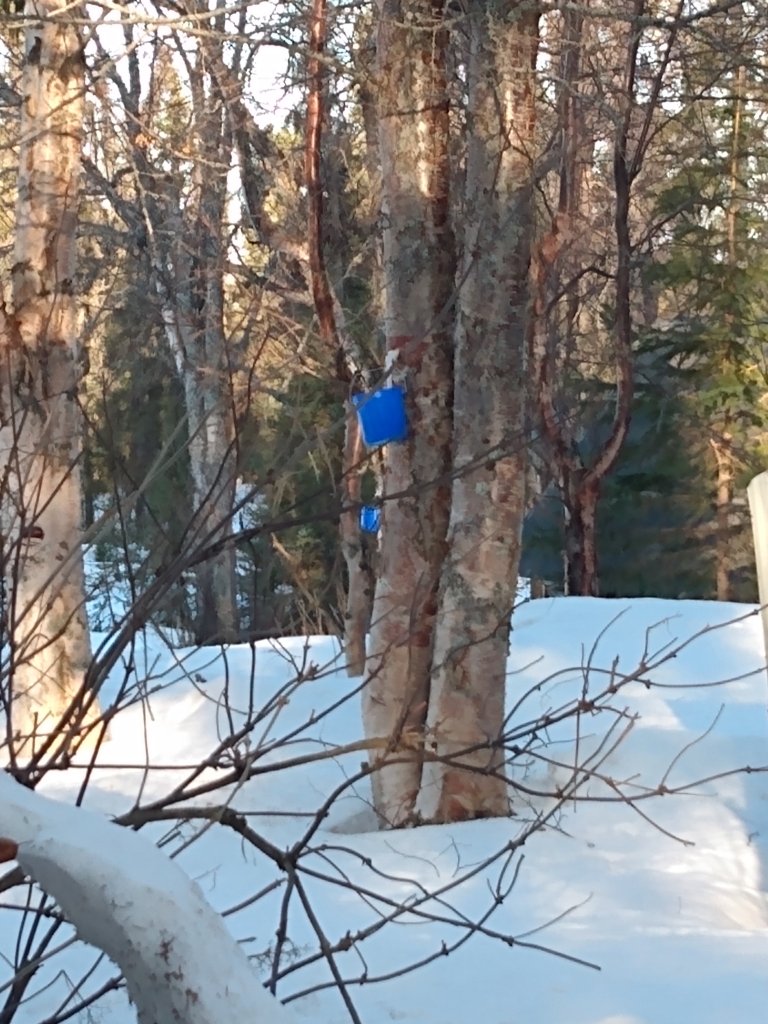
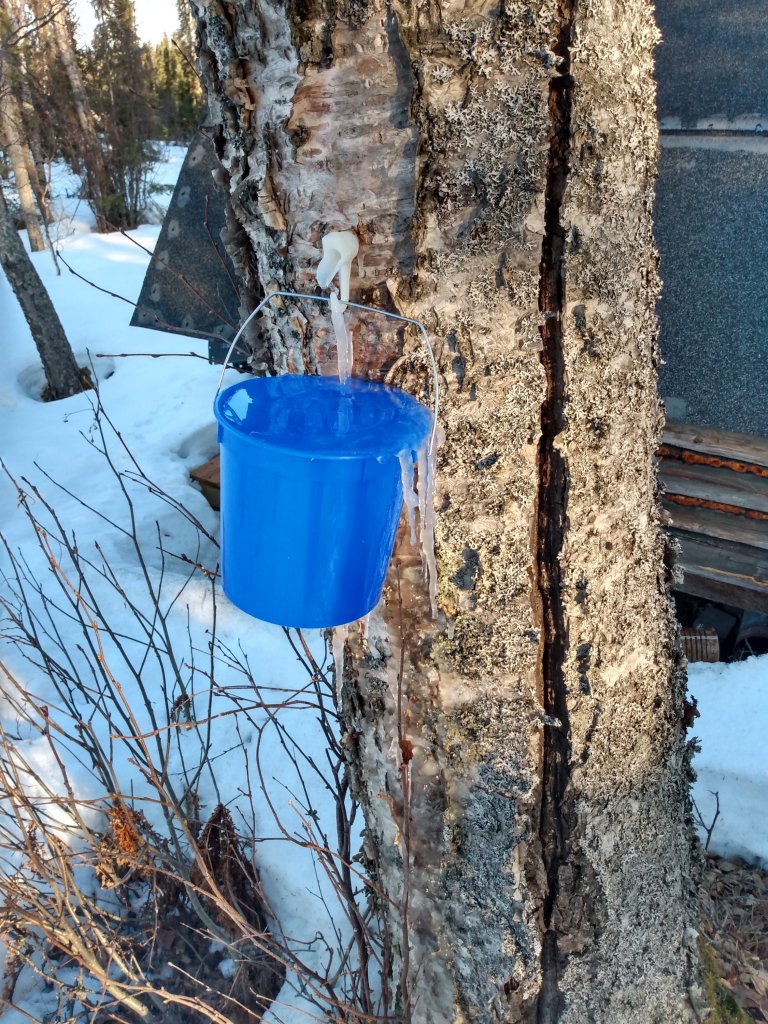
She settled on two old trees, one next to the sauna, the other up by the smoker. Taps in place and smaller buckets hung catching the few drips that morning. As the day went on, the sauna tree seemed to be the better producer.
She went out and checked late afternoon and wow! Full bucket in the sauna tree! Holy smokes it works!
Overnight the temps fell and we froze up solid. The “slow drip” tree froze up but the sauna tree had overflowed it’s bucket!

We broke off those sapcicles and ate them. Nature’s “Otter pops”!
All in just over 24 hours she got two gallons of birch sap. Impressive for her first try!
Now begins the process of cooking down the sap for syrup. I’ll let you know how long that takes!
Time to go so she whittled some birch twigs to fit the drill holes to plug the trees. Covered that with duct tape of course. And thanked the trees for their donation to our diet.
Wildcrafting. Verb. The practice of harvesting plants from their natural, or ‘wild’ habitat, primarily for food or medicinal purposes. Also called foraging.
Wild crafting has been a way of life for me but since moving to Alaska it has gained significance. Foraging is a cultural practice here as Native Alaskans have been doing for eons. Plus there are simply so many edible things here in the wild. From spruce needles to mushrooms (multiple edible species), flowers and teas and berries. Oh the berries.
It’s autumn here and that means lingonberries, or as the locals refer to them, low bush cranberries are ready.
Britannica.com says this about the Lingonberry, (Vaccinium vitis-idaea), also called cowberry, foxberry, or rock cranberry, small creeping plant of the heath family (Ericaceae), related to the blueberry and cranberry. And they are delicious.
I’ve been checking them since moose hunting to see if they were ready and finally they are. We’ve had a few good hard frosts and that always makes them sweeter!
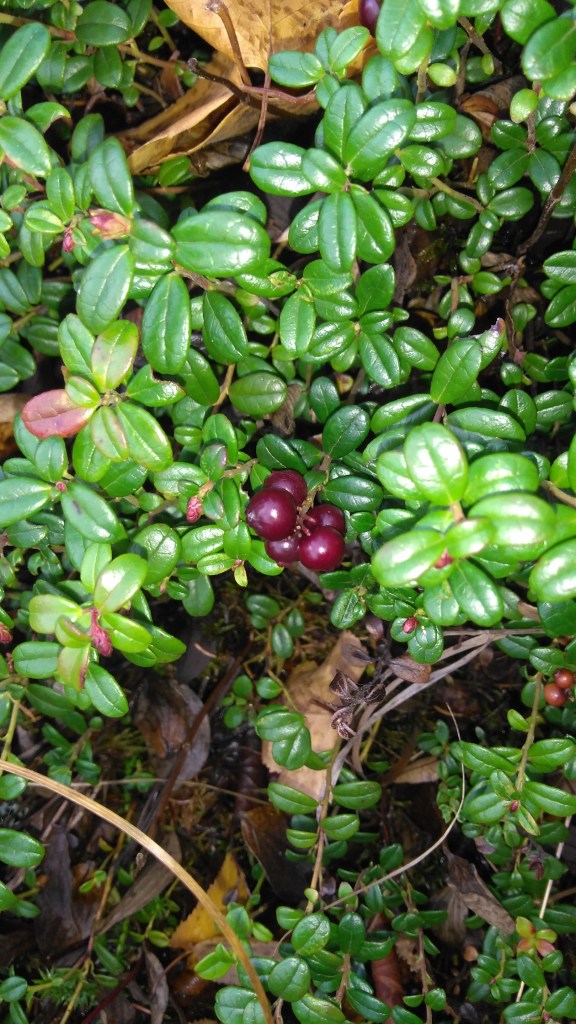
My berry buddy, Lil Mister, came along and we went exploring. He’s a good berry picker and with his lower-to-the-ground perspective, finds many that I miss!
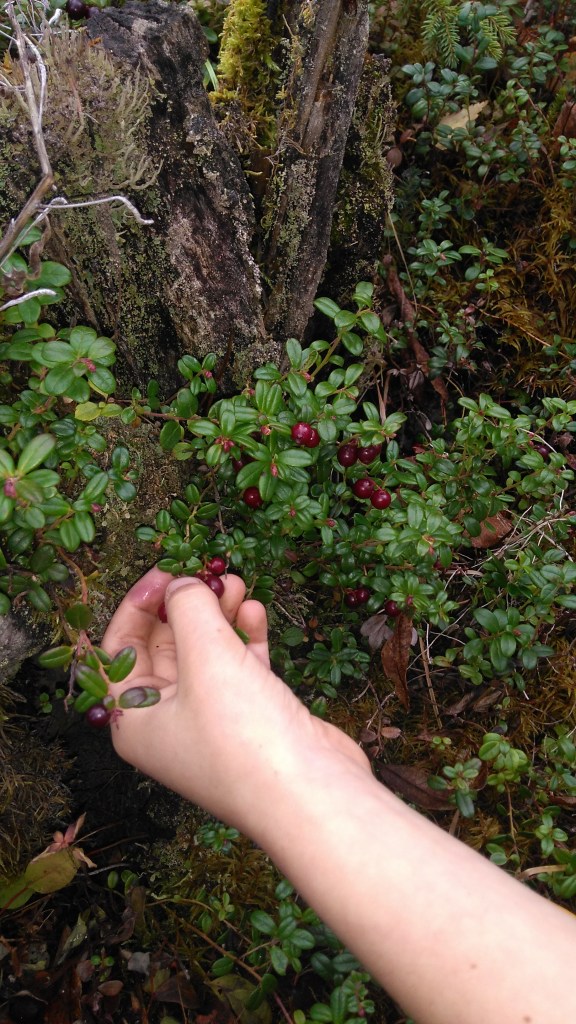
My favorite parts of berry picking are the conversations which span the entirety of the 6 year old imagination, and that little hand slipping into mine and strolling hand in hand with my littlest one. It just melts my heart.
With this batch we’re going to try our first attempt at cranberry cordial. I’m using this recipe as my guide, but I reduced the sugar by half.
Now the hard part, waiting for it to macerate!
#aklife
#wildcrafting
 Alaska on my mind...