
-
What else has been going on around here…
- Twenty-One January 29, 2026
- Nostalgia January 8, 2026
- We Made It! December 22, 2025
- We Make Do, So Can You! November 2, 2025
- Twice in 3 Days October 31, 2025
Archives
Categories
Moments in Time
March 2026 S M T W T F S 1 2 3 4 5 6 7 8 9 10 11 12 13 14 15 16 17 18 19 20 21 22 23 24 25 26 27 28 29 30 31
Tag Archives: wildcrafting
It was a short week, 6 days ago, that I tapped our Birch tree. I probably could have tapped it a few days earlier if not for just being too busy. But better some sap than none!
With the speed of the melting snow the Birch sap has slowed it’s flow.
Me
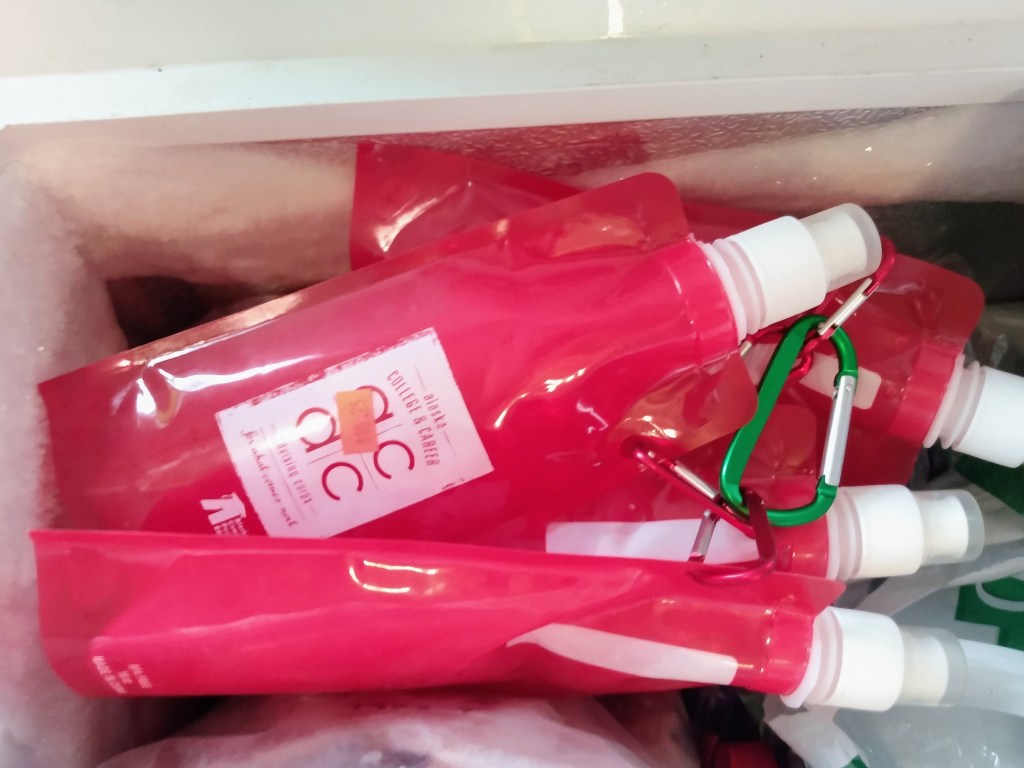
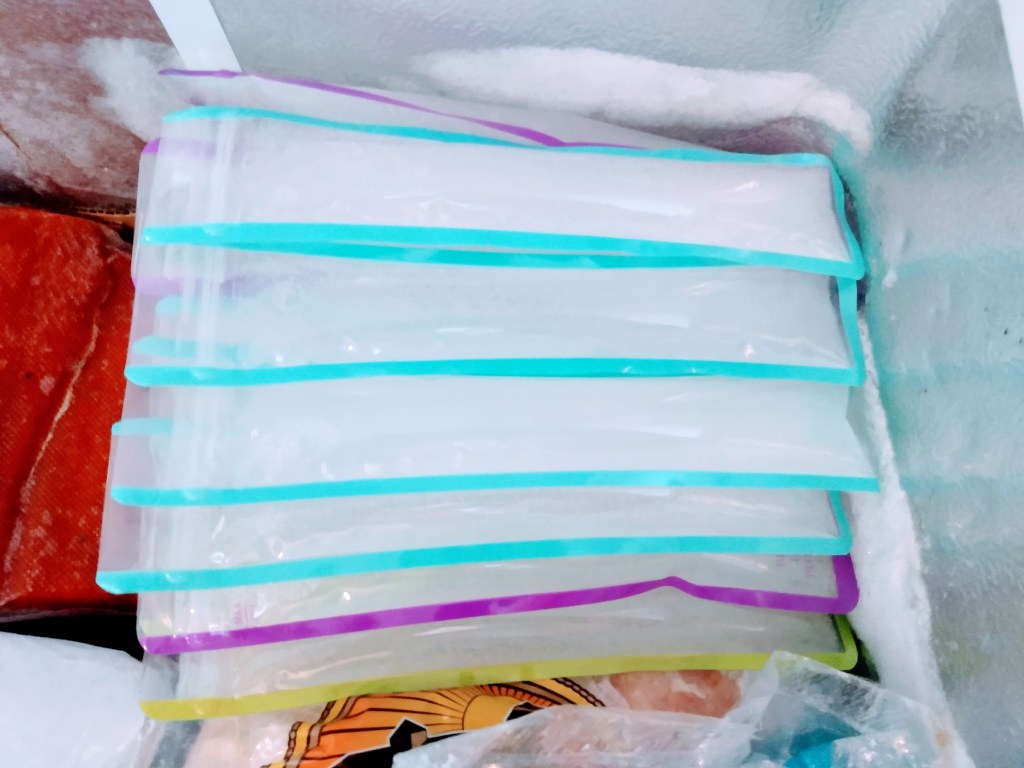
Our first gallon I poured into individual collapsible water bottles for drinking later. I found these new at the thrift store, a great find! They came with mini carabineers to clip onto your pack or belt while hiking this summer. Into the freezers they went.
Next, I used 3.5 gallons to try our version of Birch Beer, similar to root beer, and made about 3/4 of a gallon of flavored concentrate. I slow-simmered the sap in my turkey roaster until about half with a few Birch twigs. Once done I turned off the heat, added a vanilla bean and cinnamon stick and 1/2 cup xylitol to sweeten it a bit more. To serve, pour concentrate into a glass, half full, add a squeeze of fresh lime, a little more sweetener (to individual taste) and top off with seltzer. It’s got an earthy taste, faintly reminiscent of a root beer but not as herbal. I like mine less sweet, the kids like it more sweet. But they like it, that’s good.
It’s nice to have a natural soda alternative that’s not 44 grams of sugar per serving or full of who knows what.
I also put about half a gallon into some reusable popsicles for a cold summer treat. I made 20 of these, Alaskan style Otter Pops, all natural, no artificial dyes, flavors or sweeteners.
I did learn that we have another native tree here that can also be tapped: Alder. I experimented and tapped a couple larger trunks (they aren’t very big here, 3-5 inches in diameter). I wasn’t set-up properly for collecting the sap so missed a lot. I did get enough to taste it. It’s similar to the Birch water, less flavor tho. Overall good to know in an emergency but not likely to try it annually.
What remains of our harvest is apx 3.5 gallons, which I’ll turn into ice cubes and jugs of sap to freeze and use later. I’m going to try brining my salmon in Birch sap and salt this summer.
Overall we harvested about 9 gallons from a single Birch tree in 6 days, 1.5 gallons a day on average. This is important to know if we want to harvest enough for a larger batch of syrup or beverages. Since Birch water doesn’t keep for more than a couple days without spoiling, it has to be used or frozen quickly. So if we needed 5 gallons to process into wine we would need to tap 4-5 trees for a larger daily quantity.
I pulled the spile early Saturday morning. And another foraging season has come & gone.
Next up for wildcrafting is cottonwood buds, fiddleheads, fireweed shoots, spruce tips and morels. Oh boy, I can’t wait!! So much to do, so little time!
Last year Thing 1 wanted to try her hand at tapping Birch trees. We found that we all quite enjoyed the flavor of the fresh Birch sap/water so we’re at it again.
I actually found some time to tap one tree today and hopefully will tap a couple more over the next few days
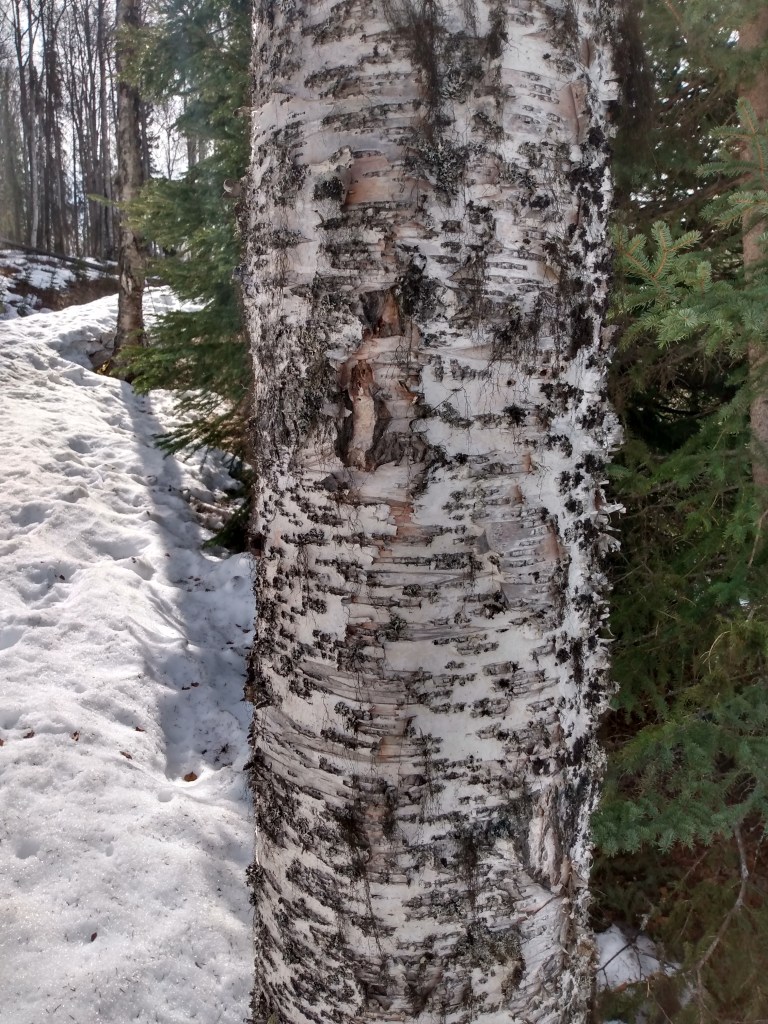
You want a good sized healthy tree. We try for a 8-10 inch in diameter tree or larger. We also only tap an individual tree once then let it rest for a number of years before ever tapping again.
I drill a slightly upward angle with a drill bit close to the size of the small end of the tap. Going into the tree about an inch and a half or so. There’s plenty of instructions online of all the technical steps if you want those.
Once the hole is drilled you just hammer the tap into the tree until it’s secure. Hang your bucket and let it drip.

We check the progress frequently to see how fast the sap is flowing. Also, anxious-to-drink-the-sap kids go out and fill little glasses to sample. That’s the trouble with having a tapped tree so close to home!
After about 7 hours we had a good 3/4 of a gallon. We poured off two quarts and filled some freezable bottles for a cool summer treat. Tomorrow we’ll see how much more we get.
Birch water is a great source of minerals and other good stuffs. Check it out! I’m not really a fan of the syrup yet, but I’d like to try Birch beer (non-alcoholic) and Birch ale this year, if we get enough sap. And of course filling up several freezer bottles and popsicles for summer!
I’ve mentioned previously how local foods were vital to a healthy sourdough’s diet so I’ll get right to the subject of this week’s post: Fiddleheads!
For years Thing 1 and I have been meaning to harvest fiddleheads. And each year we somehow miss the short window of opportunity. But not this year!
Scouting through the woods yesterday I noticed most of the ferns were up and thought I’d missed out yet again. But halfway through our hike I found a bottom area full of fiddleheads. So I refreshed my memory on safe harvesting and planned to go out first thing in the morning to provide the mosquitos breakfast & pick some.
All of the ferns I observed are Lady Ferns. Ostrich ferns are supposed to grow in this region too but I didn’t locate any.
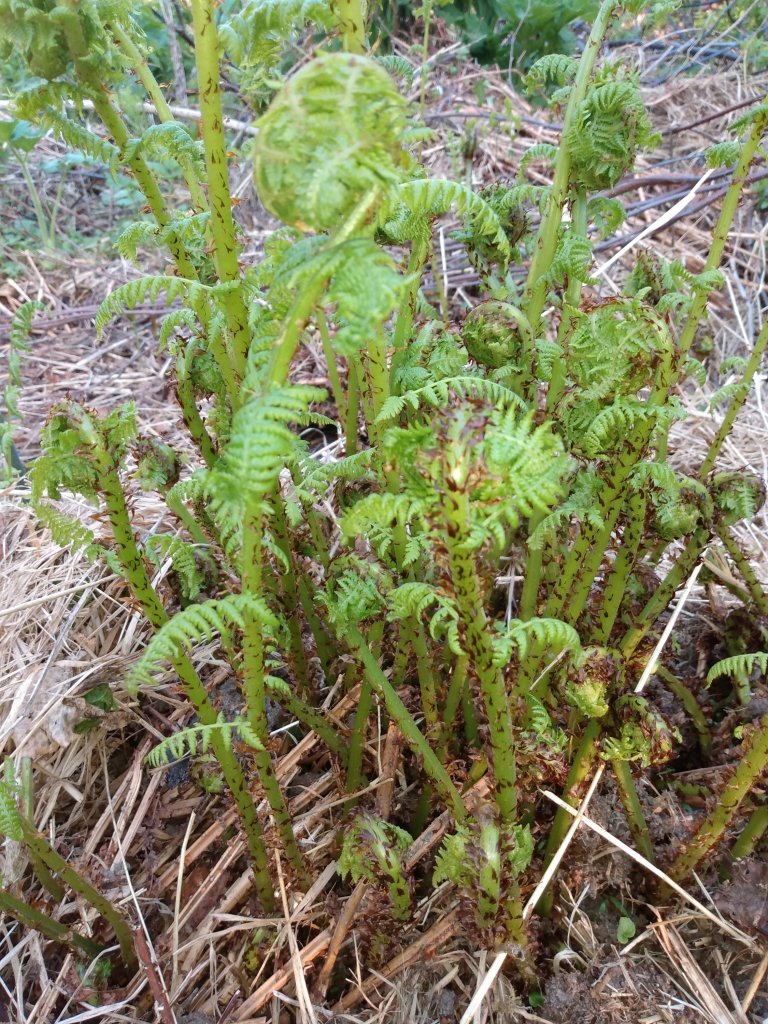
I picked enough to try a batch of pickled Fiddleheads. We’ll see if we like them. Then next year we can harvest more. There’s been no harvest pressure on these ferns plus there’s plenty for us to chose from.
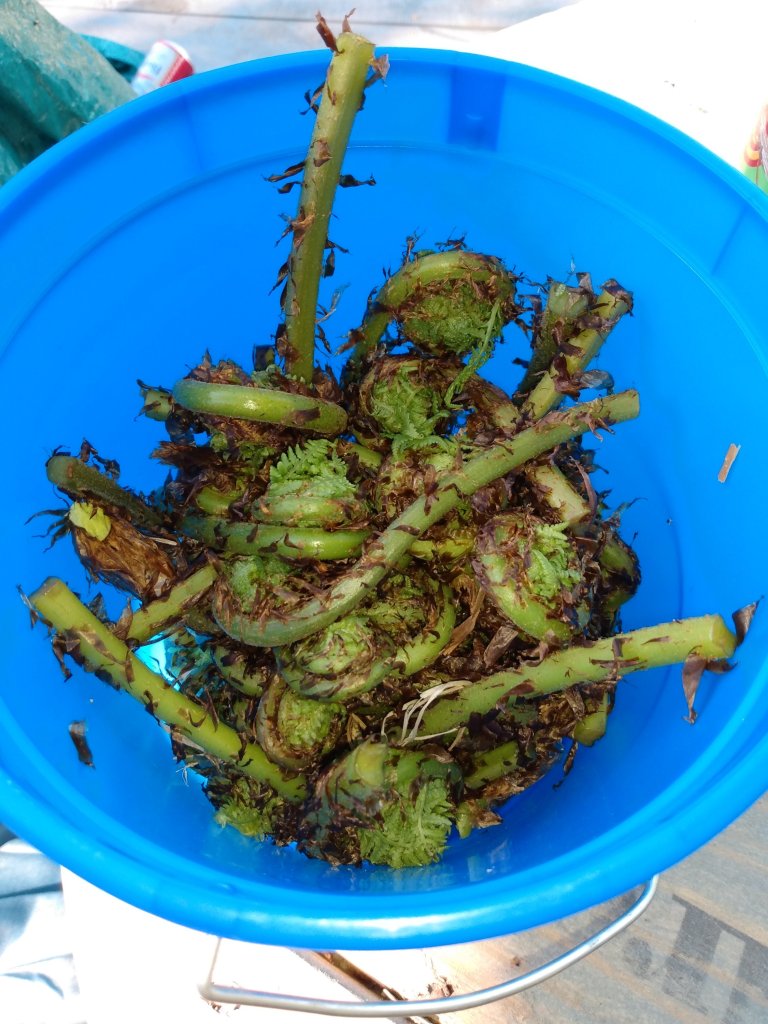
I sauteed a couple to try them and I love ’em!! Can’t wait to pickle the rest for a longer lasting treat!
I’m going to be in the lookout for Ostrich ferns too.
Resources:
Click to access Fiddleheads.pdf
Harvesting Wild Fiddlehead Ferns in Alaska
I am a Fiddlehead Forager | INDIE ALASKA
 Alaska on my mind...