Skip navigation

Tag Archives: reuse

Waste stream diversion is alive and well here in the Kenai Peninsula. We have multiple entities working independently  (and some jointly) to divert and/or reduce our waste stream. Some that I am aware of, and I’m sure there are others,  are nonprofit entities like the Cook Inlet Keeper, Kenai Change, ReGroup and the Kenai Watershed Forum providing education, composting and water monitoring services.

There’s also the Buildup Thrift Store, which has been keeping track of the total weight of materials saved from the landfill, from 2023-2025 their store saved 320,465 pounds  (that’s 160 tons!) currently for the first two months of 2026 they’re over 15,000 pounds!

Kenai Peninsula Borough’s  Central Peninsula Landfill participates in recycling programs, although recent setbacks have paused the program, cardboard recycling has now resumed with the purchase and installation of a new-to-us baler (even the Borough benefits from secondhand items)! The landfill as well as individual transfer sites have set-aside locations for items that can be rehomed.
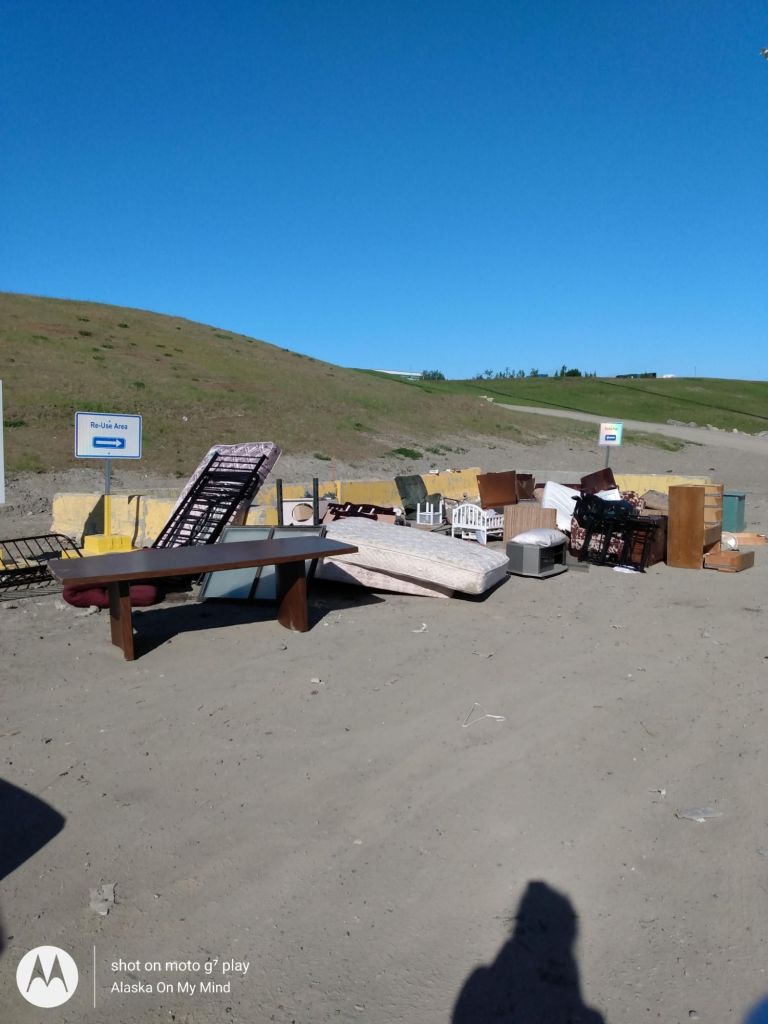
CPL CD Cell re-use area May 2024, although this was a banner day, mostly this space is underutilized and frequently cleaned out by the CPL -that means it’s discarded & moved to the burial pit with the rest of the CD cell

The Goods, sustainable grocery, offers multiple WSD opportunities, a few of those include:  reusing post consumer glass containers for packaging, offering bulk items to reduce plastic consumption, a second hand shopping area, and a community “free” area outside of their store. Plus the numerous thrift stores that accept donated items and a few Facebook groups where people offer items free of charge instead of disposing.


Individuals on the home/family level are also participating by recycling, composting, reusing and thrifting. All of these things are part of our greater waste diversion program. Picking (salvaging, dumpster diving, junk collection, etc) is one important part of waste stream diversion that is often overlooked or underappreciated. Let’s talk about this!

Pickers and junkers have been around literally forever. “One man’s trash is another man’s treasure”, a colloquial phrase attributed to the 1860s author Hector Urquhart in his “Popular Tales of the West Highlands” but many claiming it has its roots in much earlier renditions perhaps reaching back into the 1690s. Thus proving that human nature hasn’t changed all that much in the past three hundred and thirty odd years.

Picking serves to help the individual picker, whether that be via finding useful objects to employ, valuables to resell or raw materials to repurpose. Picking serves the greater community via trash clean-up in urban & rural areas, landfill waste reduction (less trash to bury extends the life of the landfill proportionally to the amount rescued) and even extending to creating housing or employment for those otherwise unserved in these areas. The habit can be contagious as many folks from all walks of life can benefit by “free” stuff occasionally or more often with the habitual pickers.


Some people have a negative view of pickers considering the practice dangerous and unsanitary, or assuming poverty is the driver of the habit while simultaneously having a negative view of poverty. While both safety and health are important factors, each individual picker is their own sovereign person, able to judge for themselves what they are prepared to risk and thus should be expected to be responsible for their own health and safety and carry their own liability instead of placing that liability onto another. Poverty is another story, and sure, there are those who pick that are also impoverished. My question is if a person is trying to provide for themselves why should we begrudge them a living?

Consumerism has cost us greatly here in the US of A and worldwide via loss of land to accumulate trash, the cost borne by taxpayers and individual fees paid by users, to the environmental impact extending far into the future. We produce far too much trash. The Central Peninsula Landfill estimates the annual amount received of all materials as 60,000 tons!!

We consume and discard.

But it wasn’t always this way. Many Indigenous people groups have long prided themselves, and rightly so, on a near zero waste lifestyle as it comes to harvesting wildlife and living in a symbiotic relationship with the Earth. For the rest of us, our not so distant ancestors produced less waste than we do. Our great-great grandparents could teach us a thing or two about buying or building quality that lasts and you repair it when it needs fixing instead of throwing it into a landfill (of which most of them had no experience with, they were throwing what trash they created into a gully or burn pit on their property!)  I see picking as an extension of such ideals: Reducing waste, making use of things that clearly still have life left and recreating other items long past their prime.


We can and should do better.

Let’s support all the ways we can divert waste, including pickers!  If you would like to join a discussion regarding picking at the CPL join the Facebook group here.

For more information on our CPL you can go here.

Mercy, it’s been a minute since my last Sourdough post. Fishing comes first, that’s my motto. So back to one of my favorite past times…

I’m always in the lookout for recycled projects. ♻️ Besides being good for the environment, and usually my budget, it’s fun to turn someone else’s trash to my treasure.

I found this set aside at the dump and figured I could repurpose it as a wood burning chiminea. Which will be just right this fall when it starts to cool down and we need to take the chill off whilst sitting outside.

Propane patio heater sans burner assembly

I started by disassembling the pipe and then removed the tabletop. Once those were apart I struggled with removing the poly weight reservoir from the underside of the pedestal. The 4 bolts holding it in place were rusted and fused, two of them pulled right through and the other two wouldn’t budge. I swear the thing was made like Samsonite luggage. It took a minute… Or 20. Wish I’d had a gorilla.

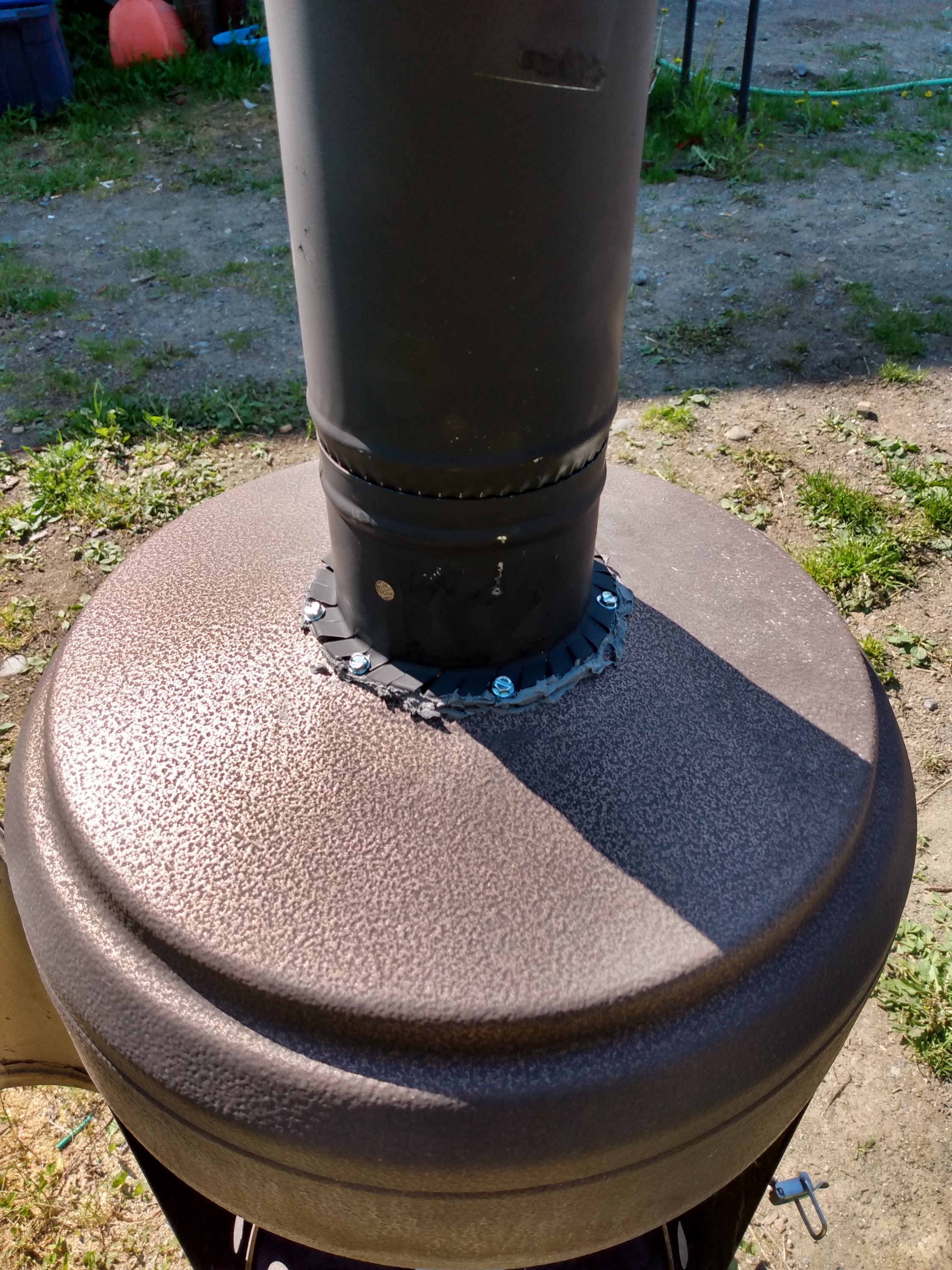
I used a 4″ hole saw and cut out a larger hole to receive the new stovepipe. Side note: A 4″ hole saw is slightly larger than needed for the stove pipe but I didn’t have anything smaller that wasn’t too small, so 4″ it is!

I affixed a starter collar with machine screws and stove mortar.

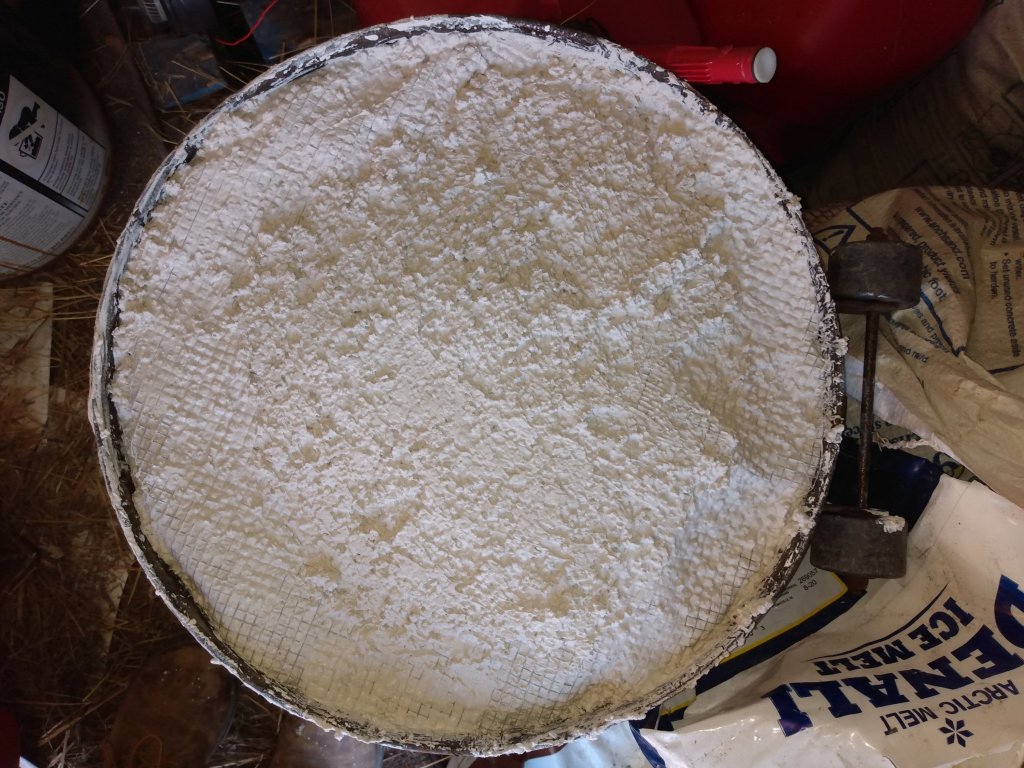
Then I made a refractory mix with plaster of Paris and perlite to weight the bottom of of the chiminea to keep it from toppling over and give it some heat protection.

Bottom view of the base filled with refractory mix.

I decided to use a metal bucket as the fire chamber inside the stove to hopefully make it last longer. It was Dean’s idea and I went with it. For the bucket I poured refractory mix in the bottom about 2 inches deep and drilled air holes around the bottom. It fits nicely inside the unit.

I let it dry thoroughly before it’s first firing, about 8 days. First fire at the beach, it works!

First firing on the beach. It works!

The refractory mix in the bottom helps insulate the unit quite well. There’s no heat exchanged at all. I used a piece of white paperboard to close a central hole when I poured the mix in. The paper is still intact and not even singed. I honestly think I could use it on a deck. I’m very happy with my landfill rescue.

For sourdoughs this seems like a no-brainer, old timers lived this way, every day. It was just normal life. When things broke, you fixed them. When they wore out you found a new purpose. When you didn’t have the resources, you cut back. In our age of modern convenience this is often a foreign concept.


Today’s climate of uncertainty, high inflation, product shortages and less expendable income might find yourself needing to make some adjustments. So, how do we apply this principle practically today? Here’s 8 ways to reduce, reuse, recycle & repurpose.


1. Take less to the dump.
Have a damaged chest: turn it into a wood bin or a flower bed? Furniture that you’re tired of, if there’s any life left consider donating it. If broken can it be repaired, by you or another person with proper skills/tools? Many of the dumped couches I’ve seen have been filthy and torn up from pets, not really functionally deficient. Performing regular maintenance and cleaning will help to keep your furniture functional for longer.
Too much trash? Can you separate burnables (paper, cardboard, tissue) and recycle it? Turn it into an art project, use it for animal bedding. Shred it and put into compost or build a worm composter let the little wigglers recycle it. Make fireplace logs from it. Recycle your aluminum cans or melt it down in a backyard forge for more homesteading fun!

2. Grow food instead of lawns.
Even a small patch of lawn can be used to supplement your household needs for food during the summer months. No lawn to spare? Consider container gardening or simple hydroponics if you don’t have much space. Growing your own food nourishes you twice, it nourishes your soul while tending the little growing plants then nourishes your body when you harvest. You don’t have to grow bushels or have a greenhouse to be productive! Use what you have!

3. Make it yourself
Learn a handcraft if you don’t already have skills like this. Crochet a potholder when you need one instead of buying a new Made in China model. Sew yourself some new curtains or maybe a quilt. Make your own bread or yogurt. Take a cooking class or better yet learn from an elder! Handmade cards and gifts are treasured around our house

4. Make do.
Need something like flower pots but can’t afford new at the store? Look around and see what containers you have sitting about. Remember the soup can you put into the trash? Paint it to decorate it if you’d like. Or tie some burlap and a ribbon around it for a shabby chic look. You can even cut the top off a soda/water bottle or milk jug for planting in. A cardboard box filled with dirt works well for one season. Old boots make great, whimsical flower pots! Get creative!

5. Hunt, Fish & Forage
All three are viable sources of food. Depending on your skill-set and available tools, most everyone can try at least one of these. Join a local garden club if you’re unsure. Befriend your green thumb neighbor and ask for growing help.

6. If it’s broke, fix it.
Car need new brakes or an oil change? YouTube is a great resource for leaning basic auto repair and maintenance. There are also books published for your specific make/model to tell you everything you need to know about your vehicle. One line of these books are called Chilton’s, you can find them at car parts stores, online and sometimes second hand. Remember, regular maintenance in your vehicle is crucial to keeping it in service as long as possible.
Jean’s knees torn out? Patch them. Zipper broke on your favorite jacket? Replace it, or find someone else to do it for you.
Some things are outside of our scope to be sure, but don’t be afraid to take on a task and learn a new skill. Besides potentially saving yourself some money you’ll gain satisfaction knowing you did it yourself.

7. Barter
Bartering, trading or swapping are great ways to procure goods when cash flow is low. You can always trade your time/labor for goods if you don’t have any goods to trade.

8. Consider different lifestyle choices.
This one gets a little personal, but no judgement, just something to ponder at night before you fall asleep.
When times are tough sometimes we have to consider options that we may never have thought we could do before. This can be a simple as riding a bike instead of driving. What about carpooling or limiting your trips? Instead of running to the store daily you could try once weekly shopping trips and buying in bulk. Cutting back on trips saves fuel expense as well as spending more money at whatever store you find yourself at.
With all this formula shortages going on, if you’re expecting, have you considered breastfeeding instead of formula feeding? It’s much more cost effective, and some say more convenient!
A big expense around here is communications. Cell phones, landlines, internet…what about getting by with one less cell phone? Have a “stay” family/home phone and a “go” phone instead of every family member having their own device. Cut the cable and put up an antenna for local channels. Cancel the Netflix, rent the occasional movie instead. Or better yet, read a book.
Are you a smoker? Besides the obvious quiting the habit, you could cut back. Instead of reaching for that next smoke, every other craving get up and go for a walk or any other activity to retrain your brain. Reducing your consumption is both economical and good for your health! Which will also save you in future medical expenses.

It’s usually during times of hardship that we are reminded about simpler days, when less is more. Sometimes we can get by with a little less & make do. Who knows, you might just find a little satisfaction in being more self sufficient! If you’re not careful, you just might turn into a sourdough.